البحوث والدراسات الإسلامية
Islamic Research & Studies
إحدى عشرة حكاية تتتبع أسئلة الخلق والحياة والهداية والمصير، في ضوء القرآن الكريم وروايات أهل البيت عليهم السلام. هنا نبذات عن الكتب وفهارسها التعريفية وصفحات العنوان، وخريطة تساعد القارئ على متابعة السلسلة، مع النسختين العربية والإنكليزية من «حكاية الكون» و«حكاية الهداية – الجزء الأول».
الباحث والكاتب السيد حسام زهاء مرتضى الصراف الحسيني
من السؤال إلى البحث
نشأت هذه الكتابات من أسئلة الأبناء والطلبة والشباب، ومن الحاجة إلى تقديم المعرفة بلغة واضحة وسرد متصل، خصوصًا لمن يعيشون بين لغتين وثقافتين. وتعبّر «حكاية الهداية» عن هذا الدافع: جمع مسيرة الأنبياء والأوصياء وحملة العهد، وربط المعرفة بالصدق والرحمة والمسؤولية وخدمة الآخرين.
أكتب بصفتي باحثًا وكاتبًا وطالب معرفة. أبدأ بالقرآن الكريم، وأستعين بروايات أهل البيت عليهم السلام وشروح العلماء وتحقيقاتهم؛ مع التمييز بين الآية والرواية والتفسير ورأي الكاتب، وبين ما ثبت وما بقي موضع بحث. وفي الموضوعات العلمية أميّز المعرفة المتخصصة عن التأويل الديني، وأحفظ لكل منهما مجاله وحدوده.
يحمل الإهداء معنى الوفاء لمن علّموني وساندوني، ومنهم الأسرة والأساتذة والطلبة. وغاية هذه الحكايات أن تصل المعرفة بالحياة والعمل، وأن تتيح للقارئ متابعة المصادر والأسئلة دون ملء فراغات الأخبار بتفاصيل غير ثابتة.
English · About this research
These writings grew from the questions of children, students and young people, and the need for clear, connected accounts, especially for readers living between languages and cultures. The Story of Divine Guidance brings together the journeys of prophets, successors and bearers of the covenant, connecting knowledge with truthfulness, compassion, responsibility and service.
I write as a researcher, author and learner. The Quran is the starting point, alongside the narrations of Ahl al-Bayt and the explanations and critical work of qualified scholars. I distinguish verse, narration, interpretation and my own commentary, and acknowledge what remains uncertain. Scientific knowledge and religious interpretation are treated within their respective fields and limits.
The dedication expresses gratitude to family, teachers and students who have supported this work. Its purpose is to connect learning with life and action while enabling readers to follow sources and questions without filling gaps in transmitted accounts with unsupported detail.
خريطة تسلسل قراءة الحكايات
اتبع الترقيم من ١ إلى ١١، واضغط على عنوان الكتاب للانتقال إلى صفحته التعريفية أدناه. هذا تسلسل موضوعي للقراءة، وليس تقريرًا لترتيب خلق الموجودات.
Follow books 1–11. Select a title to reach its entry below. This is a thematic reading sequence, not a claim about the chronological order of creation.
الكتب والنسخ المتاحة
«حكاية الكون» و«حكاية الهداية – الجزء الأول» متاحان بالعربية والإنكليزية بصيغة PDF، مع الأغلفة الجديدة وروابط القراءة والتنزيل والطباعة. الأجزاء اللاحقة من «حكاية الهداية» والكتب الثلاثة الأخيرة قيد العمل، والمتاح من بقية الكتب هنا صفحات العنوان والفهارس التعريفية.
The Story of the Universe and The Story of Divine Guidance, Volume One, are available in Arabic and English as PDFs, with updated covers and reading, download and printing links. Later volumes of Divine Guidance and the final three books remain in progress; the remaining books are represented by title pages and contents outlines.
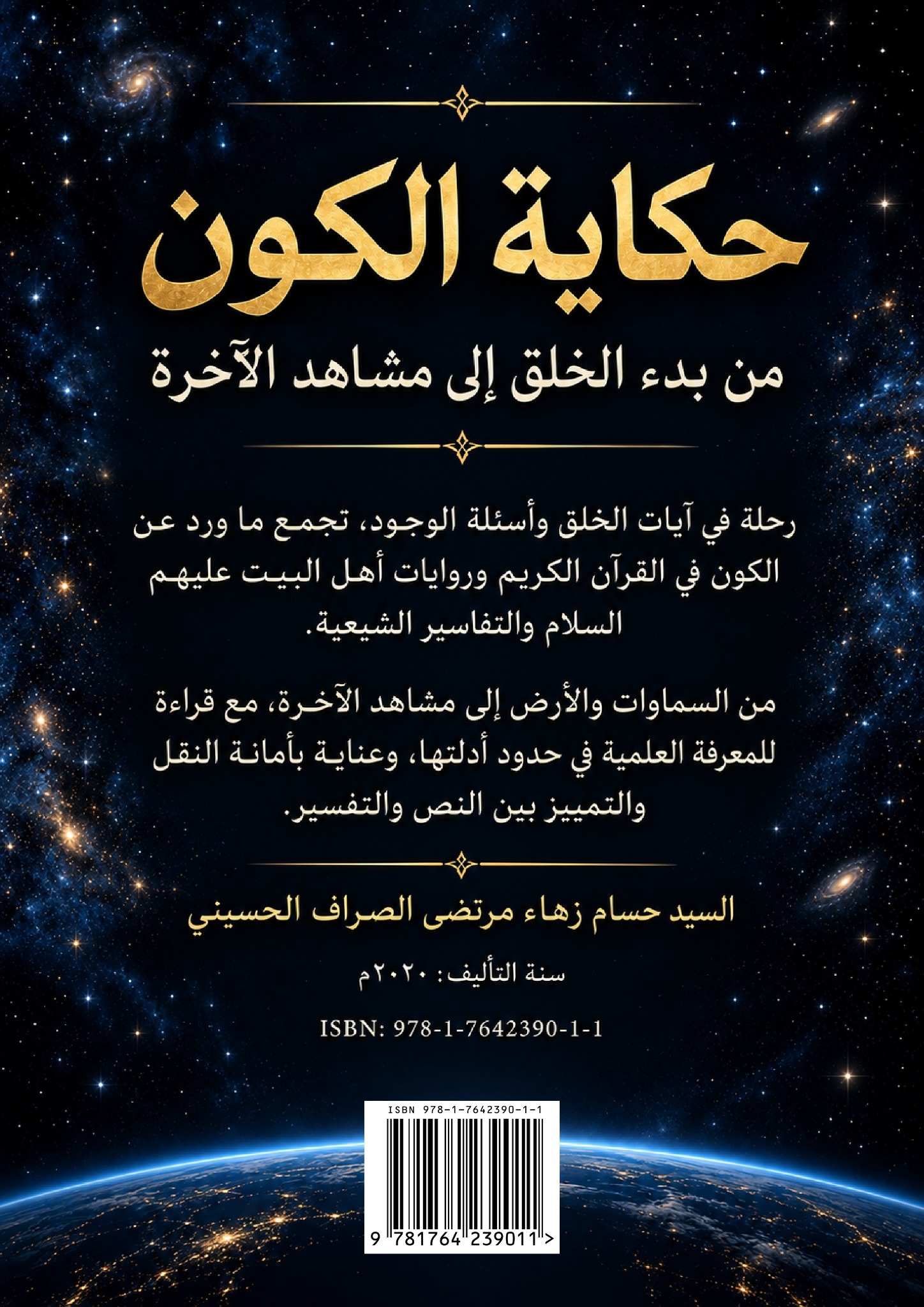
حكاية الكون
من بدء الخلق إلى مشاهد الآخرة
النسختان العربية والإنكليزية متاحتان (PDF)
ISBN: 978-1-7642390-1-1
آخر تحديث للملفات: ١٤ أكتوبر ٢٠٢٦
PDFs updated: 14 October 2026
قراءة وتنزيل النسخة العربية ↗
٥٣٨ صفحة · ١٢٫١ ميغابايت · طباعة ↗
Read / download the English edition ↗
510 pages · 6.9 MB · Print ↗
بحث في الكون بوصفه مجالًا للتأمل في آيات الخلق: السماوات والأرض، والزمن والنور، والحياة، وما ورد عن تحوّل المشهد الكوني في الآخرة. يجمع النصوص ذات الصلة ويعرض دلالاتها، مع التمييز بين النص الديني والتفسير والمعرفة العلمية وحدود كل منها.
English · Title, overview and status
The Story of the Universe
From the Beginning of Creation to the Scenes of the Hereafter
Arabic and English PDF editions available
A study of the universe as a field for reflection on the signs of creation: the heavens and earth, time and light, life, and accounts of the transformation of the cosmos in the Hereafter. It brings together relevant texts while distinguishing religious text, interpretation and scientific knowledge.
فهرس الفصول · ٤٨ عنوانًا
- الكون في خطاب القرآن الكريم
- الله خالق كل شيء — التوحيد في قراءة الكون
- بدء الخلق وحدود السؤال عن البداية
- روايات أول المخلوقات — الجمع والتحقيق
- الماء في نصوص بدء الخلق
- الدخان في قصة خلق السماء
- الرتق والفتق — قراءة في نشأة السماوات والأرض
- خلق السماوات والأرض في ستة أيام
- السماوات السبع — النصوص وحدود التصور
- الأرض وما ورد عن الأرضين
- ما بين السماوات والأرض
- بناء السماء وأبوابها وطرقها
- السماء الدنيا — الزينة والحفظ
- العرش والكرسي وحملة العرش
- البيت المعمور وسدرة المنتهى وما ورد عن الحجب
- الشمس — الضوء والحرارة والحساب
- القمر — النور والأهلة والمنازل
- النجوم والكواكب — الأسماء والدلالات
- البروج والمنازل والأفلاك
- الشهب وحفظ السماء واستراق السمع
- الليل والنهار — التعاقب والاختلاف
- المشارق والمغارب والفصول
- الزمن والمواقيت والكسوف والخسوف
- الأرض فراشًا ومهادًا وقرارًا
- الجبال — الرواسي والأوتاد
- البحار والمحيطات وما بين البحرين
- الأنهار والعيون والمياه في الأرض
- الرياح — الحركة والتلقيح وتبدّل الأحوال
- السحاب والمطر والبرد والرعد والبرق
- الأرض الحية — التربة والإنبات والأرزاق
- الزلازل والبراكين والتحولات الأرضية
- الميزان والتقدير والسنن في الخلق
- التنوع والأزواج واختلاف المخلوقات
- تسبيح الموجودات وسجودها لله
- الخلق والأمر والملك والملكوت
- الكون في قصص الأنبياء ومعجزاتهم
- الإنسان أمام الكون — التفكر والعبادة والأمانة
- كيف نعرف الكون؟
- نشأة الكون واتساعه وتطور بنيته
- المجرات والنجوم والكواكب والثقوب السوداء
- بين التفسير العلمي والتكلف في المطابقة
- الساعة وموعد التحول العظيم
- النفخ في الصور — الحدث وتسلسله في النصوص
- الشمس والقمر والنجوم في مشاهد القيامة
- السماء يوم القيامة — الانشقاق والطيّ والتبدل
- الجبال والأرض والبحار عند التحول
- تبديل الأرض والسماوات وأرض المحشر
- الكون في مشاهد الآخرة — ما نعلمه وما يبقى غيبًا
English contents · 48 chapter titles
- The universe in the discourse of the Quran
- Allah, Creator of all things: monotheism in reading the universe
- The beginning of creation and the limits of asking about origins
- Reports of the first created beings: collection and assessment
- Water in the texts on the beginning of creation
- Smoke in the account of the creation of the heavens
- Joining and separation: reading the origins of the heavens and earth
- The creation of the heavens and earth in six days
- The seven heavens: the texts and the limits of conception
- Earth and reports concerning multiple earths
- What lies between the heavens and earth
- The structure, gates and paths of the heavens
- The lowest heaven: adornment and protection
- The Throne, the Kursi and the bearers of the Throne
- The Frequented House, the Lote Tree of the Utmost Boundary and reports of the veils
- The sun: light, heat and reckoning
- The moon: light, crescents and phases
- Stars and planets: names and meanings
- Constellations, celestial stations and orbits
- Meteors, the protection of the heavens and listening by stealth
- Night and day: alternation and variation
- Places of rising and setting, and the seasons
- Time, appointed times, and solar and lunar eclipses
- Earth as a resting place, cradle and stable abode
- Mountains: stabilisers and pegs
- Seas, oceans and what lies between two seas
- Rivers, springs and water within the earth
- Winds: movement, pollination and changing conditions
- Clouds, rain, hail, thunder and lightning
- The living earth: soil, growth and sustenance
- Earthquakes, volcanoes and transformations of the earth
- Balance, measure and regularities in creation
- Diversity, pairs and differences among creatures
- The praise and prostration of created things before Allah
- Creation, command, dominion and the unseen kingdom
- The universe in prophetic accounts and miracles
- Humanity before the universe: reflection, worship and trust
- How do we know the universe?
- The origins, expansion and structural development of the universe
- Galaxies, stars, planets and black holes
- Scientific interpretation and forced correspondences
- The Hour and the time of the great transformation
- The blowing of the trumpet: the event and its sequence in the texts
- Sun, moon and stars in scenes of the Resurrection
- The heavens on the Day of Resurrection: splitting, folding and transformation
- Mountains, earth and seas at the transformation
- The replacement of earth and heavens, and the ground of the Gathering
- The universe in scenes of the Hereafter: what we know and what remains unseen
العربية ↗ · English title page ↗
حكاية الجن
من بدء الخلق إلى مشاهد الآخرة
مكتوب وغير مطبوع
بحث في عالم الجن كما تعرضه المصادر القرآنية والروائية، من الخلق وقصة إبليس إلى التكليف والاستجابة للرسالة وعلاقتهم بالإنسان. يعرض النصوص والأخبار مع التمييز بين ما تثبته الأدلة وما شاع في الحكايات والتصورات الشعبية.
English · Title, overview and status
The Story of Jinn
From the Beginning of Creation to the Scenes of the Hereafter
Written and unprinted
A study of the jinn in Quranic and transmitted sources, from creation and the account of Iblis to moral responsibility, responses to the divine message and relationships with humanity. It distinguishes evidence-based accounts from popular stories and assumptions.
فهرس الفصول · ٥٦ عنوانًا
- الجن في القرآن الكريم — مواضع ذكرهم والصورة العامة لعالمهم
- الجن والجان والشياطين والعفاريت — الأسماء ومعانيها والفروق بينها
- من نار السموم ومارج النار — أصل خلق الجن وحدود معرفتنا بطبيعتهم
- قبل خلق آدم عليه السلام — ما يثبته القرآن عن سبق وجود الجن
- الأرض قبل الإنسان — تحقيق روايات سكنى الجن وفسادهم وحروبهم
- الجن والملائكة والإنسان — اختلاف الخلقة والوظيفة والتكليف
- إبليس من الجن — هويته وعلاقته بعالم الجن
- إبليس قبل امتحان السجود — تحقيق أخبار عبادته ومقامه وأسمائه
- خلق آدم والأمر بالسجود — اللحظة التي كشفت الاستكبار
- رفض السجود — القياس الفاسد والاعتراض على الحكمة الإلهية
- اللعنة والإنظار — إبليس والوقت المعلوم
- آدم وحواء ووسوسة الشيطان — قراءة قرآنية في ضوء عصمة الأنبياء
- ذرية إبليس وقبيله وجنوده — الثابت في النصوص وما أضافته الحكايات
- هداية الجن — التكليف والحجة والرسل والمنذرون
- من آدم إلى نوح عليهما السلام — جمع الأخبار المتعلقة بالجن وتحقيقها
- من إبراهيم إلى موسى وعيسى عليهم السلام — أخبار الجن وصلتهم بالرسالات
- سليمان عليه السلام وتسخير الجن — الملك الذي وهبه الله لنبيه
- البنّاؤون والغوّاصون والمقرّنون في الأصفاد — أعمال الجن والشياطين في ملك سليمان
- العفريت وعرش ملكة سبأ — القدرة وحدودها، والتمييز بين الشخصيات في القصة
- موت سليمان عليه السلام — انكشاف جهل الجن بالغيب
- الجن قبيل البعثة — استراق السمع والكهانة وحراسة السماء
- بعثة النبي محمد صلى الله عليه وآله — عموم الدعوة للإنس والجن
- النفر الذين استمعوا القرآن — قصة الهداية في سورة الأحقاف
- سورة الجن — شهادة المؤمنين منهم على التحول من الضلال إلى الرشد
- وفود الجن ولقاؤهم بالنبي — تحقيق الروايات والأماكن والأزمنة وتعدد الوقائع
- أسماء الجن الواردة في أخبار السيرة — إسلامهم وأسئلتهم وعودتهم إلى أقوامهم
- إمامة أهل البيت وعلاقتها بتكليف الجن — دراسة النصوص ودلالاتها
- الجن وأمير المؤمنين علي عليه السلام — الوفود والأسئلة والأخبار المنسوبة إليه
- ما ورد بشأن الجن وفاطمة الزهراء والإمام الحسن عليهما السلام
- الجن والإمام الحسين عليه السلام — تحقيق أخبار النصرة والرثاء ومجالس العزاء
- أخبار الجن مع الأئمة السجاد والباقر والصادق عليهم السلام
- أخبار الجن مع الأئمة الكاظم والرضا والجواد والهادي والعسكري عليهم السلام
- الجن والإمام المهدي عليه السلام — ما ورد في الغيبة والظهور وحدود ثبوته
- أجساد الجن وصورهم — الخفاء والتشكل وإمكان الرؤية في ضوء النصوص
- ذكور الجن وإناثهم — الزواج والذرية والأسرة وما نعرفه عنها
- الطعام والشراب والنوم — تحقيق أخبار الحياة اليومية للجن
- مساكن الجن ومواضع وجودهم — النصوص والتصورات الشعبية
- لغات الجن ووسائل تواصلهم — ما تدل عليه الأخبار وما يبقى مجهولًا
- قدرات الجن وحدودها — الحركة والقوة والعمل، دون إسناد قدرة مستقلة إليهم
- الإيمان والكفر في مجتمعات الجن — الصالحون والمسلمون والقاسطون والطرائق المختلفة
- أسماء الجن وألقابهم وجماعاتهم — تحقيق ما ورد عن الأفراد والقبائل والملوك المزعومين
- كيف تنشأ الصلة بين الإنسان والجن؟ — النصوص وحدود الاتصال المدّعى
- الوسوسة والتزيين والتخويف — وسائل الإغواء ومسؤولية الإنسان عن اختياره
- القرين — معناه في القرآن والروايات وعلاقته بالإنسان
- الاستعاذة بالجن والاستعانة بهم — قراءة في النصوص والضوابط الشرعية
- السحر والكهانة وادعاء الغيب — موقع الشياطين وحدود ما تثبته الأدلة
- المسّ والصرع والأذى المنسوب إلى الجن — تحقيق الدلالات وحدود نسبة المرض إليهم
- الأحلام والظهور والتشكل والزواج بين الإنس والجن — فحص الروايات والدعاوى الشائعة
- الاستعاذة بالله والتحصّن بالذكر — الآيات والأدعية المأثورة وتمييزها من الطلاسم والخرافات
- أعمار الجن وموتهم — ما ورد في بقائهم وفنائهم
- الجن بعد الموت — سؤال الروح والبرزخ وحدود ما ورد بشأنهما
- نهاية إبليس والوقت المعلوم — الأقوال والروايات وموازنتها
- بعث الجن وحشرهم مع الإنس — اجتماع الخلق للحساب
- الحجة والشهادة والحساب — مسؤولية الجن عن الإيمان والعمل
- إبليس وأتباعه يوم القيامة — التبرؤ والخصومة وانقطاع الوعود
- المصير الأخير — عقاب كافري الجن وثواب مؤمنيهم ومسألة دخولهم الجنة
English contents · 56 chapter titles
- Jinn in the Quran: their mentions and the general picture of their world
- Jinn, jann, devils and ifrits: names, meanings and distinctions
- Scorching fire and smokeless flame: the origins of jinn and the limits of our knowledge
- Before Adam: what the Quran establishes about the earlier existence of jinn
- Earth before humanity: assessing reports of jinn’s residence, corruption and wars
- Jinn, angels and humans: differences in creation, roles and moral responsibility
- Iblis as one of the jinn: identity and relationship with their world
- Iblis before the test of prostration: examining his worship, station and names
- Adam’s creation and the command to prostrate: the moment arrogance was revealed
- Refusing to prostrate: false analogy and objection to divine wisdom
- The curse and reprieve: Iblis and the appointed time
- Adam, Eve and Satan’s whispering: a Quranic reading in light of prophetic infallibility
- Iblis’s offspring, company and forces: the texts and later stories
- Guidance of the jinn: responsibility, divine proof, messengers and warners
- From Adam to Noah: collecting and assessing reports concerning jinn
- From Abraham to Moses and Jesus: jinn and their relationship with divine messages
- Solomon and the service of the jinn: the kingdom granted to the prophet
- Builders, divers and those bound in chains: jinn and devils in Solomon’s kingdom
- The ifrit and the Queen of Sheba’s throne: power, its limits and the figures in the account
- Solomon’s death: the jinn’s lack of knowledge of the unseen revealed
- Jinn before the prophetic mission: listening by stealth, divination and guarding heaven
- Prophet Muhammad’s mission: a call to both humans and jinn
- The group who heard the Quran: guidance in Surat al-Ahqaf
- Surat al-Jinn: believers’ testimony to the move from error to right guidance
- Delegations of jinn meeting the Prophet: examining reports, places, times and events
- Jinn named in biographical reports: conversion, questions and return to their peoples
- The Imamate of Ahl al-Bayt and the responsibility of jinn: texts and meanings
- Jinn and Imam Ali: delegations, questions and attributed reports
- Reports concerning jinn, Fatima al-Zahra and Imam Hasan
- Jinn and Imam Husayn: examining reports of support, elegy and mourning gatherings
- Reports of jinn with Imams al-Sajjad, al-Baqir and al-Sadiq
- Reports of jinn with Imams al-Kazim, al-Rida, al-Jawad, al-Hadi and al-Askari
- Jinn and Imam al-Mahdi: reports of occultation and reappearance and their evidentiary limits
- Bodies and forms of jinn: invisibility, transformation and possible visibility in the texts
- Male and female jinn: marriage, offspring, family and what we know
- Food, drink and sleep: assessing reports of jinn’s everyday life
- Dwellings and locations of jinn: texts and popular beliefs
- Jinn’s languages and communication: reports and what remains unknown
- Jinn’s powers and limits: movement, strength and work without attributing independent power
- Belief and disbelief among jinn: the righteous, Muslims, unjust and differing paths
- Jinn’s names, titles and groups: assessing reports of individuals, tribes and alleged kings
- How does a connection between humans and jinn arise? Texts and claims of contact
- Whispering, enticement and fear: temptation and human responsibility for choice
- The companion: its meaning in the Quran and narrations and its relationship with people
- Seeking refuge in and assistance from jinn: texts and religious rules
- Magic, divination and claims to the unseen: devils and the limits of the evidence
- Possession, seizures and harm attributed to jinn: meanings and limits of attributing illness
- Dreams, appearances, transformations and human-jinn marriage: examining reports and claims
- Seeking refuge in Allah and protection through remembrance: transmitted prayers versus talismans and superstition
- Jinn’s lifespans and death: reports of survival and mortality
- Jinn after death: spirit, barzakh and the limits of reports
- The end of Iblis and the appointed time: comparing views and reports
- Resurrection and gathering of jinn with humans for the reckoning
- Divine proof, testimony and reckoning: jinn’s responsibility for belief and action
- Iblis and his followers on Resurrection Day: disavowal, dispute and broken promises
- The final destiny: punishment, reward and the question of jinn entering Paradise
العربية ↗ · English title page ↗
حكاية الروح
الخَلْق العظيم الذي يسدّد الله به النبي والأئمة
جارٍ العمل عليه
مشروع لدراسة دلالات الروح في القرآن وروايات أهل البيت عليهم السلام، وبخاصة الروايات المتصلة بتسديد النبي والأئمة. يفصل موضوعه عن دراسة النفس الإنسانية، ويبحث اختلاف الاستعمالات وصلتها بالملائكة والوحي وليلة القدر، مع إبقاء النتائج تابعة لدراسة النصوص.
English · Title, overview and status
The Story of the Spirit
The Great Created Being Through Whom Allah Guides and Supports the Prophet and the Imams
Work in progress
A project examining the Spirit (al-Ruh) in the Quran and the narrations of Ahl al-Bayt, especially reports concerning support granted to the Prophet and the Imams. It distinguishes this subject from the human soul and studies its relationship with angels, revelation and the Night of Decree.
فهرس الفصول · ٢٨ عنوانًا
- مواضع ذكر الروح — خريطة الآيات والمعاني
- السؤال عن الروح وحدود المعرفة الإنسانية
- روحًا من أمرنا — التأييد والنور والهداية
- روح القدس والروح الأمين — الأسماء وسياقاتها
- الروح في آيات إلقاء الوحي والتأييد
- نفخ الروح وعيسى ومريم — مواضع المقارنة والتمييز
- جمع الروايات — من المصادر الأولى إلى الموسوعات
- كيف نقرأ روايات الروح؟
- عظمة الروح — دراسة المقارنة بجبرئيل وميكائيل
- الروح والملكوت — ما تدل عليه النصوص
- الروح والملائكة — بحث التمايز والعلاقة
- الأرواح الخمسة وعلاقة روح القدس بالروح المسدِّد
- الروح مع رسول الله ﷺ — بداية الصحبة وحدود الخبر
- الإخبار والتسديد — ماذا تعني وظيفة الروح؟
- الروح والعلم والفهم
- الروح بعد النبي — استمرار التسديد
- من أمير المؤمنين إلى الإمام المهدي عليهم السلام
- المصاحبة والانتقال والبقاء — كيف تُفهم الروايات معًا؟
- الروح وتأييد الأنبياء السابقين
- الروح في ليلة القدر
- ليلة القدر والحجّة في كل عصر
- الروح والإمام المهدي في زمن الغيبة
- عروج الملائكة والروح
- يوم يقوم الروح والملائكة صفًّا
- صفات الروح — الثابت والمختلف فيه
- التسديد والعصمة وعلم الغيب في ضوء التوحيد
- الروح في التفاسير وشروح الحديث الشيعية
- الأسئلة المفتوحة وحدود الجواب
English contents · 28 chapter titles
- References to the Spirit: a map of verses and meanings
- Asking about the Spirit and the limits of human knowledge
- A Spirit of Our command: support, light and guidance
- The Holy Spirit and the Trustworthy Spirit: names and contexts
- The Spirit in verses concerning revelation and support
- The breathing of the spirit, Jesus and Mary: comparisons and distinctions
- Collecting narrations: from early sources to encyclopaedias
- How do we read narrations concerning the Spirit?
- The greatness of the Spirit: studying comparisons with Gabriel and Michael
- The Spirit and the unseen kingdom: what the texts indicate
- The Spirit and angels: distinction and relationship
- The five spirits and the relationship between the Holy Spirit and the supporting Spirit
- The Spirit with the Messenger of Allah: the beginning of companionship and the limits of reports
- Conveying knowledge and granting support: what is the Spirit’s role?
- The Spirit, knowledge and understanding
- The Spirit after the Prophet: the continuation of support
- From Imam Ali to Imam al-Mahdi
- Companionship, transfer and continuing presence: reading the narrations together
- The Spirit and support for earlier prophets
- The Spirit on the Night of Decree
- The Night of Decree and divine proof in every age
- The Spirit and Imam al-Mahdi during occultation
- The ascent of the angels and the Spirit
- The day the Spirit and angels stand in ranks
- Attributes of the Spirit: established and disputed matters
- Support, infallibility and knowledge of the unseen in the light of monotheism
- The Spirit in Shia Quranic and hadith commentaries
- Open questions and the limits of an answer
العربية ↗ · English title page ↗
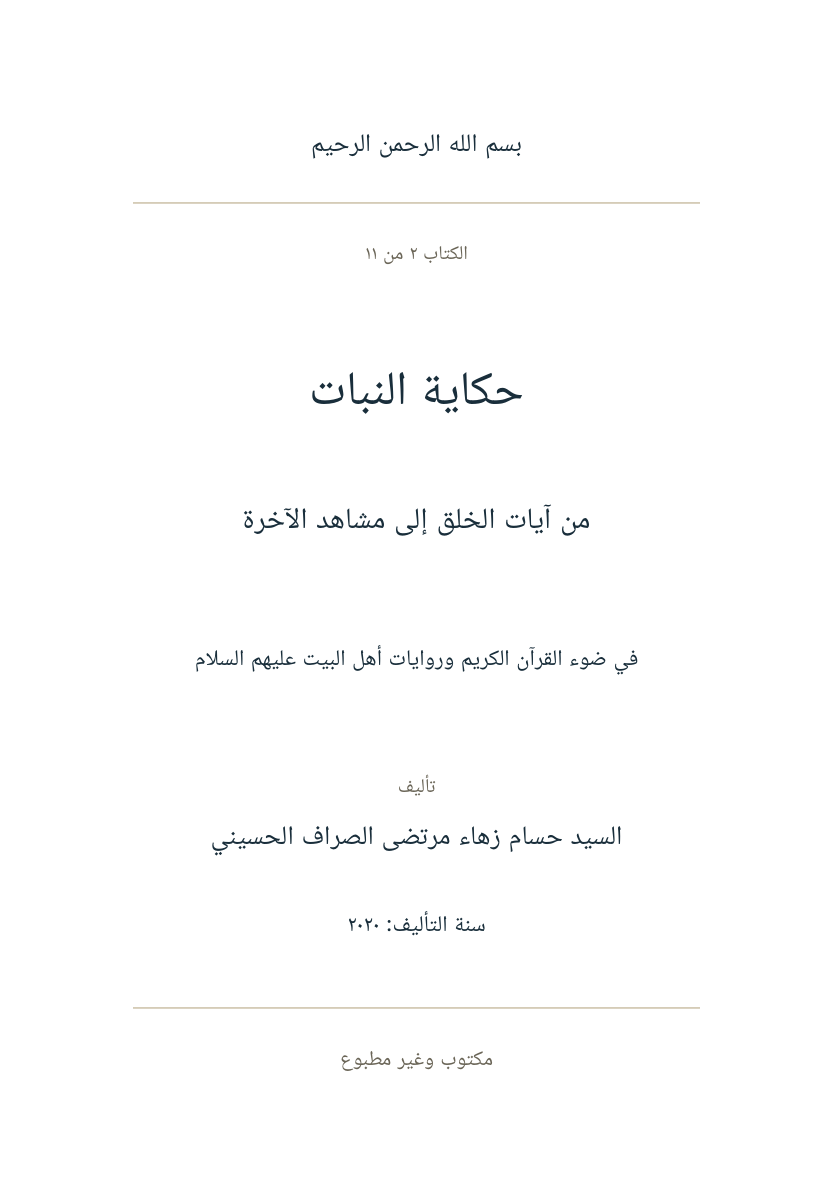
حكاية النبات
من آيات الخلق إلى مشاهد الآخرة
مكتوب وغير مطبوع
دراسة للنبات والأشجار والثمار والإنبات في القرآن الكريم وروايات أهل البيت عليهم السلام. تصل بين التأمل في الحياة النباتية، وحضور النبات في قصص الأنبياء والأمثال، وعلاقته بمعيشة الإنسان وأخلاقه وما ورد عنه في مشاهد الآخرة.
English · Title, overview and status
The Story of Plants
From the Signs of Creation to the Scenes of the Hereafter
Written and unprinted
A study of plants, trees, fruit and growth in the Quran and the narrations of Ahl al-Bayt. It connects reflection on plant life with its place in prophetic accounts and parables, human livelihoods and conduct, and descriptions of the Hereafter.
فهرس الفصول · ٤٧ عنوانًا
- النبات في مشهد الخلق
- الماء والتراب والنور — أسباب الحياة والنماء
- الحبّة والنواة — بداية حكاية جديدة
- الجذور والسيقان والأغصان — بناء النبات
- الورقة الخضراء — كيف يصنع النبات غذاءه؟
- الأزهار والتلقيح — استمرار الحياة
- الثمار والبذور — رزق يتجدد
- من الخضرة إلى الحطام — دورة حياة النبات
- النخلة — من الطلع إلى الرطب والتمر
- الزيتون — الشجرة المباركة
- التين والعنب والرمان — تنوع الثمار ووحدة الخالق
- الحبوب والسنابل والبقول — قوت الإنسان
- السدر والأثل والخمط — أشجار في مشاهد النعمة والابتلاء
- الريحان والقضب والأبّ والمرعى — خضرة الأرض ومنافعها
- الخردل واليقطين — حضور النبات في الميزان والقصة
- الكافور والزنجبيل — الأسماء ودلالاتها في وصف النعيم
- آدم وحواء عليهما السلام — الجنة والشجرة وورقها
- نوح عليه السلام — الخشب في سفينة النجاة
- إبراهيم وهاجر وإسماعيل عليهم السلام — الوادي الذي لا زرع فيه
- يوسف عليه السلام — السنابل وتدبير سنوات القحط
- موسى وبنو إسرائيل — الشجرة والعصا وطعام الأرض
- داود وسليمان عليهما السلام — الحرث والعدل
- يونس عليه السلام — اليقطين والعناية الإلهية
- مريم وعيسى عليهما السلام — النخلة والرطب والرزق
- النبي محمد ﷺ والأشجار — مشاهد من الرسالة والسيرة
- أمير المؤمنين وأهل البيت عليهم السلام — الغرس والعمل والعطاء
- الشجرة الطيبة والشجرة الخبيثة — الكلمة وجذورها وثمارها
- الحبة والسنابل والجنة بربوة — أمثال الإنفاق
- الخضرة التي تصير هشيمًا — مثل الحياة الدنيا
- صاحب الجنتين — حين يتحول البستان إلى غرور
- أصحاب الجنة — الحصاد وحق المحروم
- سبأ وجنتاها — النعمة والشكر والإعراض
- سجود الشجر وتسبيح الموجودات — عبودية الخلق
- الشجرة الملعونة وتأويلات الشجر — ضوابط الفهم
- الثمار والحبوب والبقول في المائدة
- الأزهار والرياحين والنباتات العطرية
- الأعشاب والتداوي — دراسة الرواية والمعرفة الطبية
- الزرع والغرس — العمل والرزق وعمارة الأرض
- حقوق الزرع والثمر — من السقي إلى الحصاد
- النبات في العبادة وشؤون الحياة
- النبات والبيئة — حفظ أسباب الحياة
- الأرض تحيا بعد موتها — الإنبات دليلًا على البعث
- بركات الأرض في عصر الإمام المهدي عليه السلام
- سدرة المنتهى — عند حدود المشهد المأذون بمعرفته
- أشجار الجنة وثمارها — نعيم لا ينقطع
- طوبى — اللفظ القرآني وروايات الشجرة
- الزقوم والضريع — النبات في مشاهد العذاب
English contents · 47 chapter titles
- Plants in the scene of creation
- Water, soil and light: conditions for life and growth
- Seed and kernel: the beginning of a new story
- Roots, stems and branches: the structure of a plant
- The green leaf: how does a plant make its food?
- Flowers and pollination: the continuation of life
- Fruit and seeds: renewed sustenance
- From greenery to dry remains: the plant life cycle
- The date palm: from blossom to fresh and dried dates
- The olive: the blessed tree
- Figs, grapes and pomegranates: varied fruit and the oneness of the Creator
- Grains, ears of corn and pulses: human sustenance
- Lote trees, tamarisks and bitter fruit: trees in scenes of blessing and trial
- Aromatic plants, fodder, herbage and pasture: the greenery of earth and its benefits
- Mustard and the gourd: plants in measure and narrative
- Camphor and ginger: names and meanings in descriptions of bliss
- Adam and Eve: the Garden, the tree and its leaves
- Noah: timber in the ark of salvation
- Abraham, Hagar and Ishmael: the valley without cultivation
- Joseph: ears of corn and planning for years of famine
- Moses and the Children of Israel: the tree, the staff and the produce of the earth
- David and Solomon: cultivated land and justice
- Jonah: the gourd and divine care
- Mary and Jesus: the date palm, fresh dates and provision
- Prophet Muhammad and trees: scenes from the message and biography
- Imam Ali and Ahl al-Bayt: planting, labour and giving
- The good tree and the corrupt tree: the word, its roots and fruit
- The grain, the ears and the garden on a hill: parables of giving
- Greenery that becomes dry stubble: a parable of worldly life
- The owner of the two gardens: when a garden becomes a source of pride
- The owners of the garden: harvest and the rights of the deprived
- Sheba and its two gardens: blessing, gratitude and turning away
- The prostration of trees and the praise of created things: creation’s servitude
- The cursed tree and interpretations of trees: principles of understanding
- Fruit, grains and pulses at the table
- Flowers, fragrant herbs and aromatic plants
- Herbs and treatment: studying transmitted reports and medical knowledge
- Cultivation and planting: labour, livelihood and caring for the earth
- Rights connected with crops and fruit: from irrigation to harvest
- Plants in worship and everyday life
- Plants and the environment: preserving the conditions of life
- Earth revived after death: growth as a sign of resurrection
- The blessings of the earth in the era of Imam al-Mahdi
- The Lote Tree of the Utmost Boundary: at the limits of what is revealed
- The trees and fruit of Paradise: unending bliss
- Tuba: the Quranic term and narrations concerning the tree
- Zaqqum and dari: plants in scenes of punishment
العربية ↗ · English title page ↗
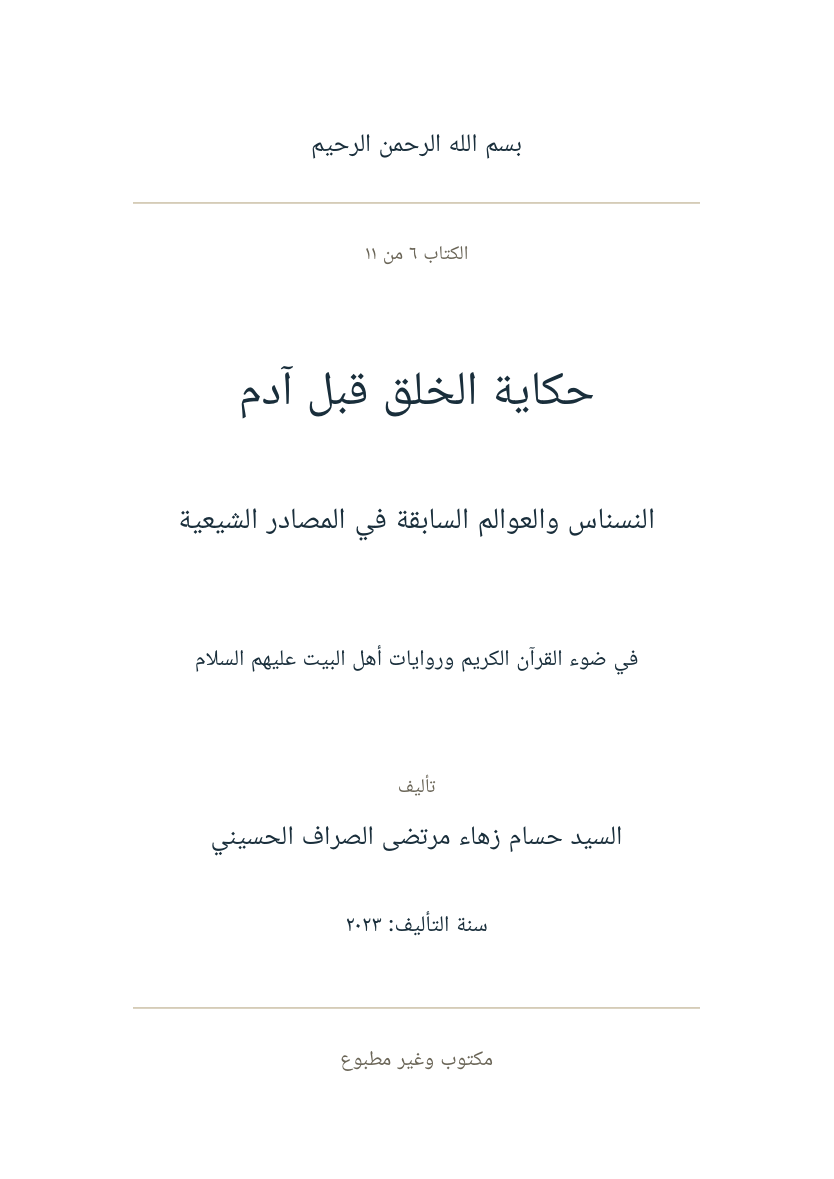
حكاية الخلق قبل آدم
النسناس والعوالم السابقة في المصادر الشيعية
مكتوب وغير مطبوع
دراسة لما ورد في المصادر الشيعية عن النسناس والعوالم السابقة لعهد آدم عليه السلام. يركّز على ألفاظ الأخبار ومعانيها وحدود ما يمكن إثباته، ويميز المروي من المقطوع به، مع إحالة التفصيل في الملائكة والجن إلى كتابيهما المستقلين.
English · Title, overview and status
The Story of Creation before Adam
Nasnas and Earlier Worlds in Shia Sources
Written and unprinted
An inquiry into Shia-source reports concerning nasnas and worlds preceding Adam. It examines the wording, meaning and limits of the evidence, distinguishing transmitted accounts from established conclusions. Detailed studies of angels and jinn belong to their separate books.
فهرس الفصول · ٢٤ عنوانًا
- قبل آدم عليه السلام — سؤال البداية وحدود المعرفة
- الخلق السابق في ضوء القرآن الكريم
- الإنسان والبشر وآدم والعالم — مفاتيح الألفاظ والمعاني
- من الرواية إلى المعرفة — كيف نتحقق من أخبار البدايات؟
- هل سبق عالمَنا عوالم أخرى؟
- أخبار تعدد آدم — قراءة في الروايات ودلالاتها
- أهل الأرض قبل بني آدم — جمع الأخبار وتصنيفها
- عوالم متعاقبة أم أخبار عن خلق مختلف؟
- الزمن في أخبار الخلق السابق
- النسناس — حكاية الاسم وتعدد استعمالاته
- النسناس في الروايات — النصوص وطرق نقلها
- ما طبيعة النسناس؟
- حياتهم على الأرض — ما تقوله الأخبار وما تسكت عنه
- الإدراك والتكليف في أخبار النسناس
- أخبار الفساد وسفك الدماء — دراسة النسبة والسياق
- نهاية النسناس — أخبار الزوال وحدود دلالتها
- هل النسناس هم البشر السابقون؟
- هل اجتمع الخلق السابق مع بداية عهد آدم؟
- الأسماء والأشخاص والجماعات — ما الذي حفظته المصادر؟
- النسناس بين الرواية والحكاية الشعبية
- اختلاف الأخبار — قراءة مقارنة ونتائج التحقيق
- الخلق السابق والبحث العلمي — حدود المقارنة
- بداية عهد آدم عليه السلام
- ماذا تعلّمنا من البحث في الخلق قبل آدم؟
English contents · 24 chapter titles
- Before Adam: the question of beginnings and the limits of knowledge
- Earlier creation in the light of the Quran
- Human, humanity, Adam and world: keys to words and meanings
- From narration to knowledge: how do we assess accounts of beginnings?
- Did other worlds precede our own?
- Reports of multiple Adams: narrations and their meanings
- Earth’s inhabitants before the children of Adam: collecting and classifying reports
- Successive worlds or reports of different creations?
- Time in reports of earlier creation
- Nasnas: the story of the name and its different uses
- Nasnas in narrations: texts and their transmission
- What is the nature of nasnas?
- Their life on earth: what reports say and leave unsaid
- Perception and responsibility in reports concerning nasnas
- Reports of corruption and bloodshed: attribution and context
- The end of nasnas: reports of disappearance and their limits
- Were nasnas earlier humans?
- Did earlier creation overlap with the beginning of Adam’s era?
- Names, individuals and groups: what have the sources preserved?
- Nasnas between transmitted narration and folklore
- Differences among reports: comparative reading and findings
- Earlier creation and scientific research: the limits of comparison
- The beginning of Adam’s era
- What have we learned from researching creation before Adam?
العربية ↗ · English title page ↗
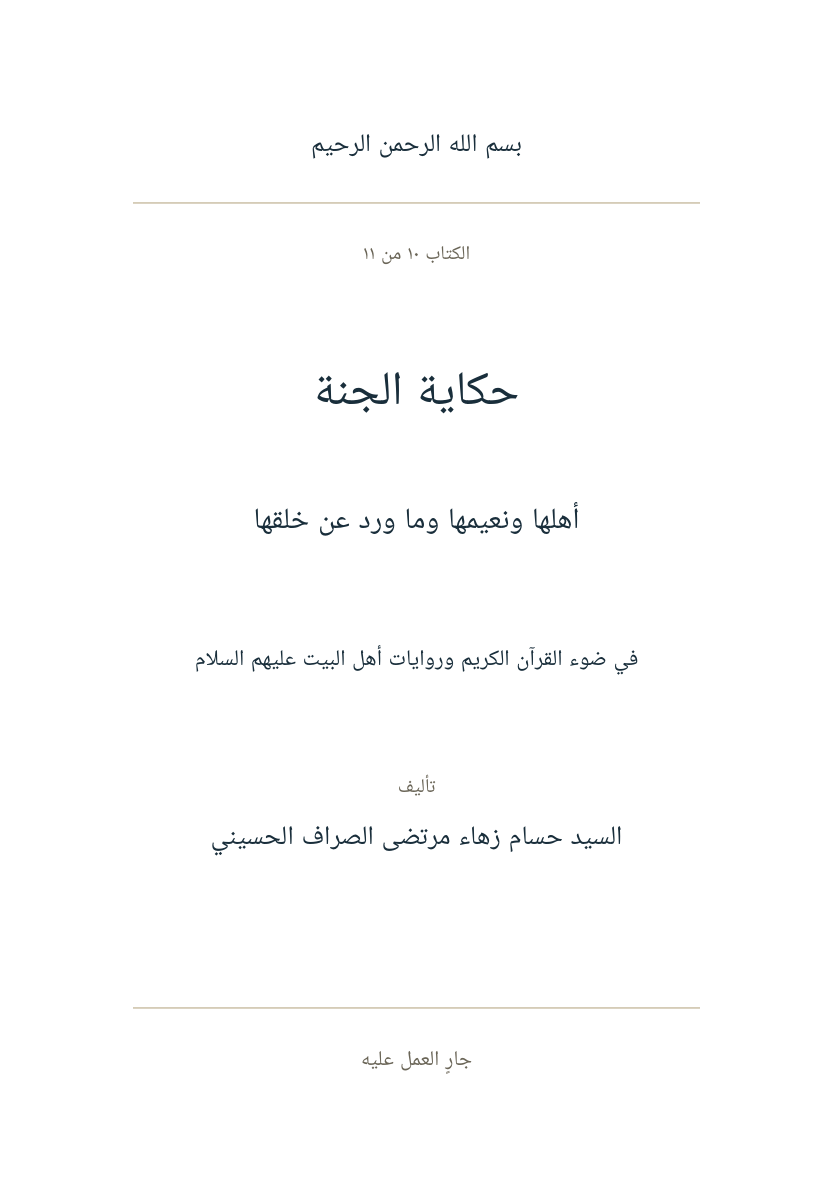
حكاية الجنة
أهلها ونعيمها وما ورد عن خلقها
جارٍ العمل عليه
مشروع يجمع موضوعات الجنة وأهلها ونعيمها وما ورد عن خلقها في القرآن والروايات. ويتناول الحور العين والولدان المخلدين وأصلهم وصفاتهم في حدود النصوص، مع التمييز بين الأوصاف الثابتة وما يحتاج إلى بحث وتوثيق.
English · Title, overview and status
The Story of Paradise
Its Inhabitants, Bliss and Accounts of Its Creation
Work in progress
A project bringing together Quranic and transmitted accounts of Paradise, its inhabitants, its bliss and its creation. It includes the houris and ever-youthful attendants, examining accounts of their origins and attributes within the limits of the texts.
فهرس الفصول · ٤٧ عنوانًا
- الجنة في القرآن الكريم: الوعد الذي يفتح باب الرجاء
- أسماء الجنة وأوصافها
- ما ورد عن خلق الجنة ووجودها
- جنة آدم وجنة البرزخ وجنة الخلد
- سعة الجنة وموقعها وصلتها بالسماوات والأرض
- من هم أهل الجنة؟ الإيمان والعمل والرحمة الإلهية
- البشارة بالجنة في الحياة وعند الموت
- من البرزخ إلى القيامة: الرحلة نحو دار البقاء
- الحساب والشفاعة والإذن بالدخول
- أبواب الجنة واستقبال أهلها
- درجات الجنة ومنازل أهلها
- أرض الجنة وأجواؤها وظلالها
- أنهار الجنة وعيونها
- أشجار الجنة وثمارها وريحانها
- طعام أهل الجنة وشرابهم
- القصور والغرف والخيام والمساكن
- الثياب والحليّ والسرر والأواني
- الأنبياء والأوصياء والصالحون في الجنة
- النبي محمد وأهل بيته عليهم السلام في الجنة
- النساء المؤمنات والمبشَّرات بالجنة
- الأطفال والذرية في الآخرة
- مؤمنو الجن وما ورد عن جزائهم
- الجسد والروح في الحياة الأبدية
- الحور العين في القرآن الكريم
- معنى الحور والعين وسائر الأوصاف
- ما ورد عن أصل خلق الحور العين
- الحور العين ونساء الدنيا: العلاقة بين التسميات
- الجمال والطهارة في وصف الحور العين
- المودة والكلام والصحبة
- الأزواج المطهَّرة والحياة الزوجية في الجنة
- الأسماء والأعداد والقصص المنسوبة إلى الحور العين
- الولدان المخلَّدون والغلمان في القرآن الكريم
- معنى الولدان والغلمان والخلود
- ما ورد عن أصل خلق الولدان المخلَّدين
- هيئتهم وجمالهم وتشبيههم باللؤلؤ
- دورهم في الجنة وصلتهم بأهلها
- الولدان والأطفال والملائكة: ضبط الفروق وحدود المعرفة
- نعيم المرأة والرجل وعدالة الجزاء
- اجتماع الأسرة والأحبة
- التعارف والزيارات وذكريات الدنيا
- قلوب بلا غلّ وحياة بلا خوف ولا حزن
- الرغبات والاختيار وتجدد النعيم
- رضوان الله والقرب منه
- لقاء الله والنظر إليه في التفسير الإمامي
- الخلود في الجنة ونهاية الموت
- ما وراء الوصف: حدود ما نعرفه عن الجنة
- كيف يغيّر الإيمان بالجنة حياتنا؟
English contents · 47 chapter titles
- Paradise in the Quran: the promise that opens the door of hope
- Names and descriptions of Paradise
- Reports concerning the creation and existence of Paradise
- Adam’s Garden, the Garden of barzakh and eternal Paradise
- The extent and location of Paradise and its relationship with the heavens and earth
- Who are the people of Paradise? Faith, deeds and divine mercy
- Glad tidings of Paradise in life and at death
- From barzakh to Resurrection: the journey towards the eternal abode
- Reckoning, intercession and permission to enter
- The gates of Paradise and the welcome of its people
- The degrees of Paradise and the dwellings of its people
- The ground, atmosphere and shade of Paradise
- The rivers and springs of Paradise
- The trees, fruit and fragrant plants of Paradise
- The food and drink of the people of Paradise
- Palaces, chambers, tents and dwellings
- Clothing, ornaments, couches and vessels
- Prophets, successors and the righteous in Paradise
- Prophet Muhammad and his household in Paradise
- Believing women and those promised Paradise
- Children and descendants in the Hereafter
- Believing jinn and reports concerning their reward
- Body and spirit in eternal life
- The houris in the Quran
- The meanings of hur, in and other descriptions
- Reports concerning the origins of the houris
- The houris and women of this world: the relationship between terms
- Beauty and purity in descriptions of the houris
- Affection, conversation and companionship
- Purified spouses and married life in Paradise
- Names, numbers and stories attributed to the houris
- Ever-youthful attendants and youths in the Quran
- The meanings of wildan, ghilman and permanence
- Reports concerning the origins of the ever-youthful attendants
- Their appearance, beauty and comparison to pearls
- Their role in Paradise and relationship with its people
- Attendants, children and angels: distinctions and the limits of knowledge
- Women’s and men’s bliss and the justice of reward
- The reunion of family and loved ones
- Recognition, visits and memories of earthly life
- Hearts without resentment and life without fear or sorrow
- Desires, choice and renewed bliss
- Allah’s pleasure and nearness to Him
- Meeting Allah and looking towards Him in Imami interpretation
- Eternity in Paradise and the end of death
- Beyond description: the limits of what we know about Paradise
- How does belief in Paradise change our lives?
العربية ↗ · English title page ↗
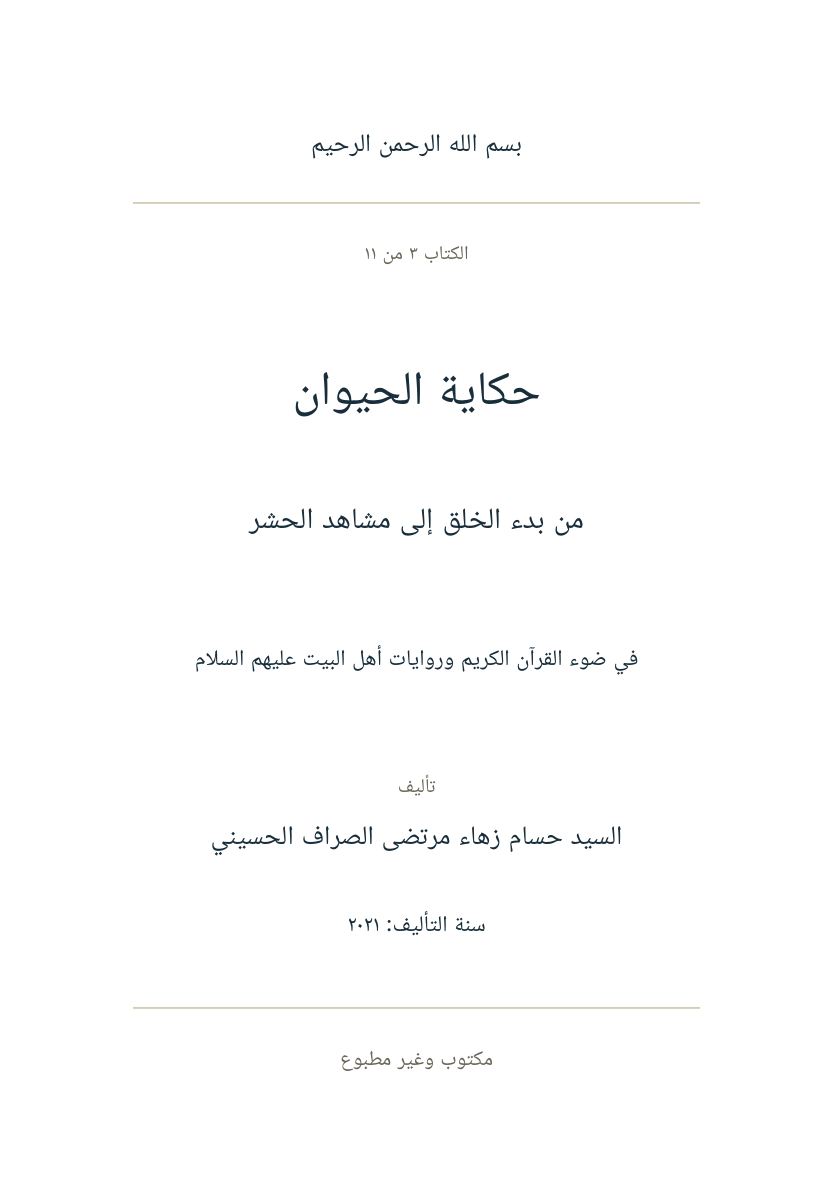
حكاية الحيوان
من بدء الخلق إلى مشاهد الحشر
مكتوب وغير مطبوع
يتناول عالم الحيوان كما تحضره الآيات والروايات: خلقه وأممه، وصلته بالإنسان والبيئة، وحضوره في قصص الأنبياء وسيرة النبي وأهل البيت عليهم السلام. ويبحث الرحمة بالحيوان وحقوقه، وما ورد عن موته وحشره، مع حفظ حدود الدليل.
English · Title, overview and status
The Story of Animals
From the Beginning of Creation to the Scenes of the Gathering
Written and unprinted
An exploration of animals in Quranic verses and transmitted reports: their creation and communities, their relationships with people and the environment, and their place in the lives of the prophets and Ahl al-Bayt. It also considers compassion, animal rights, death and the Gathering within the limits of the evidence.
فهرس الفصول · ٥٤ عنوانًا
- الحيوان في لغة القرآن والروايات
- خلق الحيوان والماء أصلًا للحياة
- الحيوان قبل الإنسان: ما الذي نعرفه؟
- تنوّع الحيوان وانتشاره في الأرض
- الحيوان آية من آيات الخالق
- «أمم أمثالكم»: عالم الحيوان في النظر القرآني
- الهداية إلى أسباب الحياة
- التكاثر والأمومة ورعاية الصغار
- إدراك الحيوان ومشاعره وتواصله
- تسبيح الحيوان وسجوده لله
- الإبل: الخلقة والمنافع والحضور في حياة الإنسان
- البقر والعجول: الرزق والعمل والابتلاء
- الضأن والمعز: الأنعام والرزق والشعائر
- الخيل: الجمال والقوة والخدمة
- البغال والحمير: الركوب والحمل والأمثال
- الكلب والذئب: بين القصة والواقع والمثل
- الفيل والسباع والوحوش
- القردة والخنازير وروايات المسخ
- الطير في القرآن: الطيران والرزق والتسبيح
- الغراب والهدهد والسلوى والطير الأبابيل
- الطيور في روايات أهل البيت عليهم السلام
- النحل: الوحي والعسل وبناء الحياة
- النمل والعنكبوت: المساكن والتواصل والمثل
- البعوض والذباب والجراد والقُمَّل والفراش
- الحيات والثعابين والضفادع وغيرها من صغار الدواب
- الأسماك والحيتان وعالم البحر
- الغراب وابنا آدم: مشهد الدفن الأول في القصة القرآنية
- الحيوان في سفينة نوح عليه السلام
- ناقة صالح عليه السلام: الآية والابتلاء والعاقبة
- إبراهيم عليه السلام والطير والذبح العظيم
- الحيوان في قصة يوسف عليه السلام
- موسى عليه السلام: العصا والبقرة وآيات الابتلاء
- سليمان عليه السلام وعالم الحيوان
- الحوت في قصتي يونس وموسى عليهما السلام
- كلب أصحاب الكهف وحمار الذي مرّ على القرية
- الطير في آية عيسى عليه السلام وأصحاب الفيل
- الحيوان في حياة النبي محمد ﷺ
- الحيوان في سيرة أهل البيت عليهم السلام
- أخبار مخاطبة الحيوان وشكواه ومعرفة منطقه
- الحيوان في أخبار الدلائل والكرامات
- الأسماء والأوصاف الحيوانية في المرويات الشيعية
- حقوق الحيوان على الإنسان
- الرفق بالحيوان ومنع تعذيبه
- الركوب والحمل والعمل وتربية الحيوان
- الحيوان غذاءً: الحلال والحرام والتذكية
- الصيد بين الحاجة والعبث
- الحيوان في العبادة والشعائر
- دفع أذى الحيوان ومسؤولية الإنسان عن بيئته
- موت الحيوان ونهاية حياته الدنيوية
- حشر الحيوان في القرآن الكريم
- العدل والقصاص بين الحيوانات: دراسة الروايات
- مصير الحيوان بعد الحشر
- الحيوان في مشاهد الجنة والعذاب
- دابة الأرض وحدود المعرفة بأخبار آخر الزمان
English contents · 54 chapter titles
- Animals in the language of the Quran and narrations
- The creation of animals and water as the origin of life
- Animals before humanity: what do we know?
- Animal diversity and distribution across the earth
- Animals as signs of the Creator
- “Communities like you”: animals from the Quranic perspective
- Guidance towards the means of life
- Reproduction, motherhood and care of the young
- Animal perception, feelings and communication
- Animals’ praise and prostration before Allah
- Camels: creation, benefits and their place in human life
- Cattle and calves: sustenance, work and trial
- Sheep and goats: livestock, sustenance and religious rites
- Horses: beauty, strength and service
- Mules and donkeys: riding, carrying and parables
- The dog and the wolf: narrative, reality and parable
- The elephant, predators and wild animals
- Apes, pigs and reports of transformation
- Birds in the Quran: flight, provision and praise
- The raven, hoopoe, quail and birds in flocks
- Birds in the narrations of Ahl al-Bayt
- Bees: inspiration, honey and the building of life
- Ants and spiders: homes, communication and parable
- Mosquitoes, flies, locusts, qummal and moths
- Snakes, serpents, frogs and other small creatures
- Fish, whales and the marine world
- The raven and Adam’s two sons: the first burial in the Quranic account
- Animals in Noah’s ark
- Salih’s she-camel: the sign, trial and outcome
- Abraham, the birds and the great sacrifice
- Animals in the account of Joseph
- Moses: the staff, the cow and signs of trial
- Solomon and the animal world
- The great fish in the accounts of Jonah and Moses
- The dog of the Companions of the Cave and the donkey of the man who passed a town
- Birds in the sign of Jesus and the People of the Elephant
- Animals in the life of Prophet Muhammad
- Animals in the lives of Ahl al-Bayt
- Reports of addressing animals, their complaints and understanding their speech
- Animals in reports of signs and extraordinary gifts
- Animal names and descriptions in Shia narrations
- Animals’ rights in relation to humanity
- Kindness to animals and preventing cruelty
- Riding, carrying, work and animal husbandry
- Animals as food: lawful and unlawful consumption and ritual slaughter
- Hunting for need and hunting without purpose
- Animals in worship and religious rites
- Preventing harm from animals and human responsibility for their environment
- Animal death and the end of earthly life
- The gathering of animals in the Quran
- Justice and recompense among animals: a study of narrations
- The fate of animals after the Gathering
- Animals in scenes of Paradise and punishment
- The Beast of the Earth and the limits of knowledge about the end times
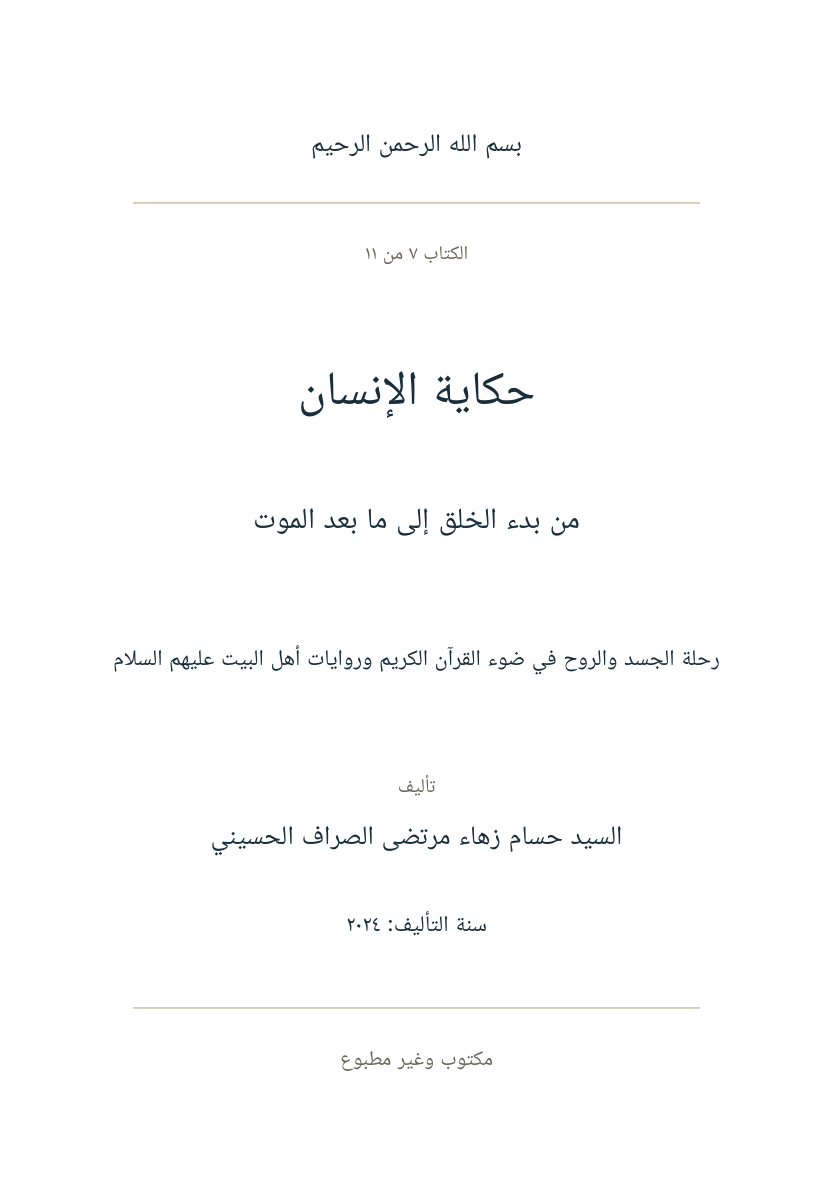
العربية ↗ · English title page ↗
حكاية الإنسان
من بدء الخلق إلى ما بعد الموت
مكتوب وغير مطبوع
يربط البحث في خلق الإنسان ومراحل حياته بين النصوص الدينية والمعرفة العلمية والبيولوجية والتشريحية، مع تمييز مجال كل منها. يمتد من بدايات الحياة وتكوّن الجسد إلى العقل والنفس والروح والمرض ونهاية الحياة وما يرد عن القبر والبرزخ والبعث.
English · Title, overview and status
The Story of the Human Being
From the Beginning of Creation to Beyond Death
Written and unprinted
A study of human creation and the stages of life that brings religious texts into conversation with scientific, biological and anatomical knowledge while distinguishing their respective fields. It moves from the beginnings of life and bodily development to mind, soul, illness, death, the grave, the intermediate realm and resurrection.
فهرس «حكاية الإنسان» · ١٤ بابًا و١٣٣ عنوانًا
الصفحات الافتتاحية والمقدمة
- صفحة العنوان.
- الإهداء.
- كلمة المؤلف: لماذا «حكاية الإنسان»؟
- المقدمة العامة: الإنسان بين سؤال البداية وسؤال المصير.
- منهج الكتاب: القرآن الكريم، وروايات أهل البيت عليهم السلام، والتفاسير الإمامية، والمراجع العلمية المتخصصة.
- ضوابط البحث: تحقيق الروايات، وتمييز النص عن تفسيره، والنتائج العلمية الراسخة عن الفرضيات والمسائل المفتوحة.
- دليل قراءة الكتاب: المصطلحات والرسوم والإحالات ودرجات ثبوت الأخبار.
الباب الأول: الإنسان وسؤال البداية
- من هو الإنسان؟ — الإنسان والبشر وبنو آدم في الاستعمال القرآني.
- لماذا خُلق الإنسان؟ — العبادة والمعرفة والابتلاء وعمارة الأرض.
- مادة الخلق الأولى — التراب والطين والصلصال والماء في الآيات والتفاسير.
- خلق آدم عليه السلام — تسوية الجسد ونفخ الروح وتعليم الأسماء.
- خلق حواء وبداية الأسرة الإنسانية — النصوص والروايات واختلاف الأقوال.
- ذرية آدم وبداية انتشار البشر — ما تثبته المصادر وما يبقى محل بحث.
- الميثاق والفطرة وعالم الذر — دراسة الآيات والروايات ووجوه تفسيرها.
- أصل الإنسان في العلوم الحديثة — الأحافير والوراثة والتطور وحدود المقارنة مع التفسير الديني.
الباب الثاني: الحياة في أصغر وحداتها
- ممَّ يتكوّن الجسد؟ — الماء والعناصر والأملاح والجزيئات الحيوية.
- الخلية الإنسانية — الغشاء والنواة والعضيّات ووظائفها.
- المادة الوراثية — الحمض النووي والجينات والكروموسومات.
- كيف تتكاثر الخلايا وتتخصص؟ — الانقسام والتمايز والخلايا الجذعية.
- من الخلايا إلى الأنسجة والأعضاء — بناء الجسد وتنظيمه.
- الوراثة والتنوع الإنساني — الصفات والطفرات والتفاعل بين الجينات والبيئة.
- حياة الخلية وموتها — التجدد والإصلاح والشيخوخة الخلوية والموت المبرمج.
الباب الثالث: التهيؤ لخلق إنسان جديد
- الجهاز التناسلي عند الرجل — التشريح والوظائف والتنظيم الهرموني.
- الجهاز التناسلي عند المرأة — التشريح والوظائف والتنظيم الهرموني.
- تكوين الحيوانات المنوية والبويضات — رحلة الخلايا التناسلية ونضجها.
- الدورة الشهرية والإباضة والخصوبة — التغيرات الدورية في جسد المرأة.
- الإخصاب وبداية التكوين الجنيني — التقاء الخليتين وبداية الانقسام.
- التمايز الجنسي والتنوع في التطور الجنسي — الجوانب الوراثية والهرمونية والتشريحية.
- تأخر الإنجاب والمساعدة الطبية على الإخصاب — مدخل علمي ومسائل فقهية مرتبطة بالموضوع.
الباب الرابع: الإنسان في رحم أمّه
- من الإخصاب إلى الانغراس — الرحلة الأولى وبداية العلاقة برحم الأم.
- المشيمة والحبل السري والأغشية الجنينية — التغذية والتبادل والحماية.
- السائل الأمنيوسي وبيئة الرحم — الجنين داخل عالمه الأول.
- بدايات بناء الجسد — الطبقات الجنينية وتشكّل مخطط الجسم.
- نشأة الأعضاء والأجهزة — القلب والدماغ والعمود الفقري والأطراف وسائر الأعضاء.
- الجنين عبر مراحل الحمل — متابعة منظمة للتطور أسبوعًا بعد أسبوع.
- الحركة والحواس قبل الولادة — تطور الاستجابة والسمع وسائر القدرات.
- الأم والجنين — التغيرات الجسدية عند الأم والعوامل المؤثرة في الحمل.
- التوائم والحمل المتعدد — صور التكوين والاختلافات بينها.
- الاضطرابات الخَلقية وفقد الحمل والولادة المبكرة — فهم علمي وإنساني.
- مراحل الخلق في القرآن الكريم — النطفة والعلقة والمضغة والعظام والكسوة باللحم في سياقاتها اللغوية والتفسيرية.
- نفخ الروح في الروايات — دلالة النصوص وتقييمها ومسألة التوقيت وحدود معرفتنا.
الباب الخامس: خريطة الجسد الإنساني
- الجسد بوصفه وحدة متكاملة — مواضع الأعضاء وتجويفات الجسم والعلاقات التشريحية.
- الجلد والشعر والأظافر — الغطاء الحي والحماية والإحساس.
- العظام والمفاصل والغضاريف — الدعامة والحركة والبناء المتجدد.
- العضلات والأوتار والأربطة — القوة والثبات والتناسق الحركي.
- الدم ونخاع العظم — الخلايا والبلازما والتخثر وتكوين الدم.
- القلب والأوعية الدموية — البنية والدورة الدموية.
- الجهاز اللمفاوي والمناعة — الدفاع والمراقبة والتوازن.
- الجهاز التنفسي — المسالك الهوائية والرئتان وتبادل الغازات.
- الفم والأسنان واللسان والغدد اللعابية — المضغ والتذوق وبداية الهضم.
- المريء والمعدة والأمعاء — رحلة الغذاء والهضم والامتصاص والإخراج.
- الكبد والمرارة والبنكرياس — المعالجة والتخزين والإفراز.
- الكليتان والجهاز البولي — الترشيح وتنظيم مكونات البيئة الداخلية.
- الغدد الصماء والهرمونات — شبكة الرسائل الكيميائية في الجسد.
- الدماغ والحبل الشوكي والأعصاب — التشريح والتنظيم والاتصال.
- العين والإبصار — من استقبال الضوء إلى معالجة المعلومات البصرية.
- الأذن والسمع والتوازن — استقبال الصوت وإدراك وضع الجسم.
- الشم والتذوق واللمس والإحساس بالجسد — أبواب الاتصال بالعالم.
- الصوت والكلام — الحنجرة والتنفس وأعضاء النطق والتحكم العصبي.
الباب السادس: كيف يحافظ الجسد على حياته؟
- التوازن الداخلي — تنظيم الحرارة والسوائل والأملاح والحموضة.
- الغذاء والطاقة والتمثيل الغذائي — كيف يستخدم الجسد ما نأكله؟
- الجوع والعطش والشبع — الإشارات العصبية والهرمونية المنظمة.
- النوم واليقظة والساعة البيولوجية — الإيقاع اليومي ووظائف النوم.
- الحركة والجهد والراحة — تكامل العضلات والتنفس والدورة الدموية.
- الألم والإجهاد والاستجابة للخطر — آليات التنبيه والتكيف.
- التئام الجروح وتجدد الأنسجة — إمكانات الإصلاح وحدودها.
- الكائنات الدقيقة المصاحبة للإنسان — الميكروبيوم وعلاقته بوظائف الجسد.
الباب السابع: من الولادة إلى الشيخوخة
- المخاض والولادة — مراحل الخروج من الرحم.
- الأنفاس الأولى — انتقال المولود إلى الحياة خارج رحم أمّه.
- الرضاعة والتغذية المبكرة — النمو والاحتياجات والعلاقة بالأم.
- الطفولة الأولى — تطور الحركة والحواس واللغة والتعلق.
- الطفولة والتعلّم — نمو المهارات والتفكير والعلاقات الاجتماعية.
- البلوغ والمراهقة — التحولات الجسدية والنفسية والاجتماعية.
- الشباب والنضج — اكتمال النمو والمسؤولية وبناء الحياة.
- الأمومة والأبوة — التحولات الجسدية والنفسية والرعاية الأسرية.
- منتصف العمر والتحولات الهرمونية والإنجابية — تغير الاحتياجات والقدرات.
- الشيخوخة وتفاوت مساراتها — الجسد والذاكرة والاستقلال والحاجة إلى الرعاية.
- العمر والأجل ومراحل الضعف والقوة في القرآن والروايات — قراءة في رحلة الحياة ومعناها.
الباب الثامن: الدماغ والنفس والروح
- النفس والروح والعقل والقلب — دراسة المصطلحات القرآنية والروائية وتمييز دلالاتها.
- الوعي والإدراك — ما تدرسه علوم الدماغ وما يبقى سؤالًا مفتوحًا.
- الذاكرة والتعلّم والنسيان — كيف تتشكل الخبرة الإنسانية؟
- العواطف والدوافع والشخصية — التفاعل بين الجسد والتجربة والبيئة.
- الأحلام والرؤى — أبحاث النوم ودراسة ما ورد في النصوص.
- الإرادة والاختيار والمسؤولية — البحث النفسي والعصبي والرؤية الكلامية.
- العلاقة بين النفس والجسد — التأثير المتبادل وحدود التفسير.
- الحياة الروحية وتزكية النفس — العبادة والذكر والرجاء والخوف والطمأنينة.
الباب التاسع: المرض والضعف والعلاج
- كيف يحدث المرض؟ — الأسباب وعوامل الخطورة وآليات الخلل.
- العدوى والالتهاب واضطرابات المناعة — صور الاستجابة والاختلال.
- الأمراض الوراثية والخَلقية — التنوع في الأسباب والمظاهر.
- الأورام والسرطان — اختلال تنظيم نمو الخلايا.
- الأمراض المزمنة والتنكسية — أثرها في أجهزة الجسد ومراحل العمر.
- الإصابات والإعاقة والتأهيل — الوظيفة والتكيف وكرامة الإنسان.
- الصحة النفسية والاضطرابات النفسية — الفهم والرعاية والعلاقة بالصحة الجسدية.
- التشخيص والدواء والجراحة — كيف تُبنى المعرفة العلاجية وتُقيَّم؟
- المرض في القرآن وروايات أهل البيت عليهم السلام — الابتلاء والصبر والتداوي وحقوق المريض.
- ما يُنسب إلى الطب المأثور — تحقيق الروايات ودلالاتها وعلاقتها بالدليل الطبي.
الباب العاشر: الجسد أمانة وكرامة
- كرامة الإنسان وحرمة جسده — في الحياة وبعد الوفاة.
- الغذاء والنظافة والحركة والوقاية — النصوص الدينية والمعرفة الصحية في مجال كل منهما.
- الحياة الزوجية والصحة الإنجابية — الجوانب الجسدية والنفسية والأخلاقية.
- الحمل والجنين وقرارات الإنجاب — عرض المسائل العلمية والفقهية ومواطن الاختلاف.
- التبرع بالأعضاء وزراعتها والبحث الطبي والتشريح — أسئلة الكرامة والمصلحة والضوابط الفقهية.
- رعاية الضعفاء والمرضى وكبار السن — مسؤولية الأسرة والمجتمع.
الباب الحادي عشر: حين تقترب نهاية الحياة
- حين يضعف الجسد — التغيرات المصاحبة للأمراض المتقدمة ونهاية الحياة.
- الرعاية التلطيفية — تخفيف المعاناة ومساندة الإنسان وأسرته.
- الاحتضار طبيًّا — تغير التنفس والدورة الدموية والوعي ووظائف الأعضاء.
- ما الموت من المنظور الطبي؟ — التعريفات والمعايير وطرق التحقق.
- توقف القلب والموت الدماغي والغيبوبة — الفروق الطبية والأسئلة الفقهية.
- الموت والتوفّي في القرآن الكريم — الأجل وسكرات الموت ولقاء الله.
- قبض الروح وملك الموت وأعوانه — جمع النصوص ودراسة دلالاتها.
- ما ورد عن مشاهد المحتضر — البشارة والخوف والحضور عند الموت وتمحيص الروايات.
- تجارب الاقتراب من الموت — الشهادات والأبحاث وحدود الاستدلال بها.
الباب الثاني عشر: الجسد بعد الموت وإلى القبر
- الساعات الأولى بعد الوفاة — التغيرات الجسدية المبكرة.
- التحلل ومصير الأنسجة والعظام — المراحل والعوامل البيئية المؤثرة.
- الجسد بين التراب والماء وسائر البيئات — اختلاف مسارات التحلل والحفظ.
- تجهيز الميت — الغسل والتحنيط والكفن والصلاة والتشييع والدفن في الفقه الإمامي.
- حرمة الميت وحقوقه — التعامل مع الجثمان والقبر وما يتصل بهما.
- ما ورد عن بقاء بعض الأجساد — دراسة الروايات والأخبار وحدود تعميمها.
- الفقد والحزن والحداد — تجربة الأحياء ومواساتهم واستمرار حقوق الميت.
الباب الثالث عشر: الروح وحياة البرزخ
- ما البرزخ؟ — الآيات والروايات ومعنى المرحلة بين الموت والبعث.
- الروح بعد مفارقة الجسد — ما تثبته النصوص وحدود الكلام في الغيب.
- سؤال القبر وفتنته — النصوص، ومن تشملهم، واختلاف التفاصيل المنقولة.
- ضغطة القبر ونعيم البرزخ وعذابه — التحقيق في المعنى والأسباب والعموم والاستثناء.
- الجسد البرزخي أو المثالي — المصطلح وأصوله الروائية والتفسيرية وحدود اعتماده.
- تلاقي الأرواح وتعارفها — ما ورد في المصادر ودرجات ثبوته.
- أحوال الأنبياء والشهداء والمؤمنين وغيرهم في البرزخ — جمع النصوص دون تعميم غير ثابت.
- صلة الموتى بالأحياء — الزيارة والسلام والسماع والاطلاع على الأحوال في ضوء الروايات.
- ما ينفع الميت بعد موته — الدعاء والصدقة والحقوق والآثار الباقية.
- الزمن والإدراك وانتظار البعث في البرزخ — ما نعرفه وما سكتت عنه المصادر.
الباب الرابع عشر: البعث والمصير الأخير
- نهاية العالم والنفخ في الصور — المشاهد القرآنية والروايات المرتبطة بها.
- البعث وإعادة الخلق — أدلة المعاد ومشاهد إحياء الموتى.
- عودة الإنسان بجسده وروحه — الهوية الشخصية والمعاد الجسماني في البحث الإمامي.
- الحشر وأرض المحشر — اجتماع الخلائق ومواقف القيامة.
- كتاب الأعمال والشهود وشهادة الجوارح — ظهور ما قدّم الإنسان.
- الحساب والميزان والعدل الإلهي — المسؤولية والحقوق ومآلات الأعمال.
- الشفاعة والرحمة والمغفرة — النصوص والشروط وحدود الفهم.
- الصراط ومآل الإنسان — دراسة الآيات والروايات.
- الجنة وحياة أهلها — الجسد والإدراك والعلاقات والنعيم.
- النار وأحوال أهلها — الوعيد والعذاب ومسائل الخلود.
- الرجعة في المصادر الإمامية — موضعها من البحث في الموت والعودة والبعث، وتمييز مفاهيمها.
- الحياة الآخرة ومعنى الخلود — المصير وما تكشفه النصوص عن حياة الإنسان الأخيرة.
الخاتمة العامة
حكاية الإنسان: ماذا تعني معرفة بدايتنا وجسدنا ومصيرنا؟
وتجمع الخاتمة نتائج الرحلة: كرامة الإنسان، ومسؤوليته، والعناية بجسده، وتزكية نفسه، وعلاقته بالآخرين، واستعداده للموت؛ مع بيان ما ثبت، وما بقي محل خلاف أو بحث، وما لا نملك فيه نصًّا معتبرًا أو دليلًا علميًّا.
الملاحق العلمية والتوثيقية
- ملحق الآيات المرتبطة بخلق الإنسان وحياته وموته ومعاده، مرتبة بحسب الموضوع.
- ملحق الروايات: المصادر الأصلية ومواضعها ونتائج التحقيق.
- جدول مراحل التكوين الجنيني، مع بيان طريقة حساب عمر الحمل والعمر منذ الإخصاب.
- أطلس تشريحي مبسط لأجهزة الجسد.
- جداول مراحل النمو والتغيرات المرتبطة بالعمر.
- معجم المصطلحات العلمية والتشريحية: العربية ومقابلاتها الأجنبية.
- معجم المصطلحات القرآنية والروائية والكلامية.
- جدول المسائل المختلف فيها دينيًّا أو علميًّا، وطبيعة الخلاف في كل منها.
- قائمة تدقيق تغطية الموضوعات والمصادر قبل اعتماد النسخة النهائية.
المصادر والمراجع
- القرآن الكريم.
- كتب الحديث والرواية الإمامية.
- التفاسير الإمامية.
- كتب العقيدة والكلام والمعاد.
- المراجع الفقهية ذات الصلة.
- مراجع علم الأجنة والتشريح ووظائف الأعضاء والوراثة.
- مراجع علوم الأعصاب والنفس والنمو والشيخوخة.
- المراجع الطبية والأبحاث العلمية المحكمة.
الفهارس الختامية
- فهرس الآيات القرآنية.
- فهرس الأحاديث والروايات.
- فهرس الأنبياء والأئمة والأعلام.
- فهرس الأعضاء والأجهزة والمصطلحات العلمية.
- فهرس المصطلحات الدينية والعقدية.
- فهرس الرسوم والصور والجداول.
- الفهرس الموضوعي التفصيلي.
- فهرس المحتويات العام: الأبواب والفصول والعناوين الفرعية وأرقام الصفحات.
English contents · 14 parts and 133 chapter titles
Opening pages and introduction
Title page; dedication; author’s foreword; general introduction; method and research safeguards; guide to terms, illustrations, references and the evidentiary status of reports.
Part 1: Humanity and the question of beginnings
- Who is the human being?
- Why was humanity created?
- The first material of creation
- The creation of Adam
- The creation of Eve and the beginning of the human family
- Adam’s descendants and the spread of humanity
- The covenant, innate disposition and the realm of particles
- Human origins in modern science
Part 2: Life in its smallest units
- What is the body made of?
- The human cell
- Genetic material
- How do cells multiply and specialise?
- From cells to tissues and organs
- Heredity and human diversity
- The life and death of a cell
Part 3: Preparation for a new human life
- The male reproductive system
- The female reproductive system
- The formation of sperm and eggs
- The menstrual cycle, ovulation and fertility
- Fertilisation and the beginning of embryonic development
- Sexual differentiation and variations in sex development
- Infertility and medically assisted fertilisation
Part 4: The human being in the mother’s womb
- From fertilisation to implantation
- The placenta, umbilical cord and foetal membranes
- Amniotic fluid and the uterine environment
- The beginnings of bodily development
- The formation of organs and body systems
- Foetal development through pregnancy
- Movement and the senses before birth
- Mother and foetus
- Twins and multiple pregnancy
- Congenital conditions, pregnancy loss and premature birth
- Stages of creation in the Quran
- The breathing of the spirit in transmitted reports
Part 5: A map of the human body
- The body as an integrated whole
- Skin, hair and nails
- Bones, joints and cartilage
- Muscles, tendons and ligaments
- Blood and bone marrow
- The heart and blood vessels
- The lymphatic system and immunity
- The respiratory system
- The mouth, teeth, tongue and salivary glands
- The oesophagus, stomach and intestines
- The liver, gallbladder and pancreas
- The kidneys and urinary system
- Endocrine glands and hormones
- The brain, spinal cord and nerves
- The eye and vision
- The ear, hearing and balance
- Smell, taste, touch and bodily sensation
- Voice and speech
Part 6: How does the body sustain life?
- Homeostasis
- Food, energy and metabolism
- Hunger, thirst and satiety
- Sleep, wakefulness and the biological clock
- Movement, exertion and rest
- Pain, stress and the response to danger
- Wound healing and tissue renewal
- The human microbiome
Part 7: From birth to old age
- Labour and birth
- The first breaths
- Breastfeeding and early nutrition
- Early childhood
- Childhood and learning
- Puberty and adolescence
- Youth and maturity
- Motherhood and fatherhood
- Midlife and hormonal and reproductive transitions
- Ageing and its different trajectories
- Lifespan, the appointed term, weakness and strength in the Quran and narrations
Part 8: Brain, self and spirit
- Nafs, ruh, intellect and heart: meanings and distinctions
- Consciousness and perception
- Memory, learning and forgetting
- Emotions, motivation and personality
- Dreams and visions
- Will, choice and responsibility
- The relationship between self and body
- Spiritual life and the purification of the self
Part 9: Illness, vulnerability and treatment
- How does illness arise?
- Infection, inflammation and immune disorders
- Genetic and congenital conditions
- Tumours and cancer
- Chronic and degenerative diseases
- Injury, disability and rehabilitation
- Mental health and mental disorders
- Diagnosis, medication and surgery
- Illness in the Quran and the narrations of Ahl al-Bayt
- Medical practices attributed to transmitted tradition
Part 10: The body as a trust and a source of dignity
- Human dignity and bodily inviolability
- Food, hygiene, movement and prevention
- Married life and reproductive health
- Pregnancy, the foetus and reproductive decisions
- Organ donation and transplantation, medical research and dissection
- Caring for vulnerable, ill and older people
Part 11: As the end of life approaches
- When the body weakens
- Palliative care
- The medical process of dying
- What is death from a medical perspective?
- Cardiac arrest, brain death and coma
- Death and the taking of life in the Quran
- The taking of the spirit, the Angel of Death and his helpers
- Reports of experiences at the moment of dying
- Near-death experiences
Part 12: The body after death and into the grave
- The first hours after death
- Decomposition and the fate of tissues and bones
- The body in soil, water and other environments
- Preparing the deceased for burial
- The dignity and rights of the deceased
- Reports concerning the preservation of some bodies
- Loss, grief and mourning
Part 13: The spirit and life in barzakh
- What is barzakh, the intermediate realm?
- The spirit after leaving the body
- Questioning and trial in the grave
- The pressure of the grave, and bliss and punishment in barzakh
- The intermediate or imaginal body
- The meeting and recognition of spirits
- Prophets, martyrs, believers and others in barzakh
- Connections between the dead and the living
- What benefits the deceased after death?
- Time, perception and awaiting resurrection in barzakh
Part 14: Resurrection and the final destiny
- The end of the world and the blowing of the trumpet
- Resurrection and re-creation
- The return of the human being in body and spirit
- The Gathering and its setting
- The record of deeds, witnesses and the testimony of bodily members
- The reckoning, the balance and divine justice
- Intercession, mercy and forgiveness
- The path and the human destination
- Paradise and the lives of its inhabitants
- The Fire and the condition of its inhabitants
- Raj’a in Imami sources
- The Hereafter and the meaning of eternity
General conclusion
What does it mean to understand our beginnings, our bodies and our destiny? Human dignity, responsibility, bodily care, purification of the self, relationships and preparation for death; established findings, disputed questions and the limits of evidence.
Scientific and documentary appendices
Thematic Quranic verses; narrations and their sources and assessment; stages of embryonic development and pregnancy dating; a simplified anatomical atlas; growth and ageing tables; scientific and anatomical glossary; Quranic, transmitted and theological glossary; disputed religious and scientific questions; a topic-and-source coverage checklist.
Sources and references
The Quran; Imami hadith and narration collections; Imami commentaries; theology and resurrection studies; relevant jurisprudence; embryology, anatomy, physiology and genetics; neuroscience, psychology, development and ageing; medical references and peer-reviewed research.
Closing indexes
Quranic verses; hadith and narrations; prophets, Imams and named figures; organs, systems and scientific terms; religious and theological terms; illustrations and tables; detailed subject index; full table of contents with parts, chapters, subheadings and page numbers.
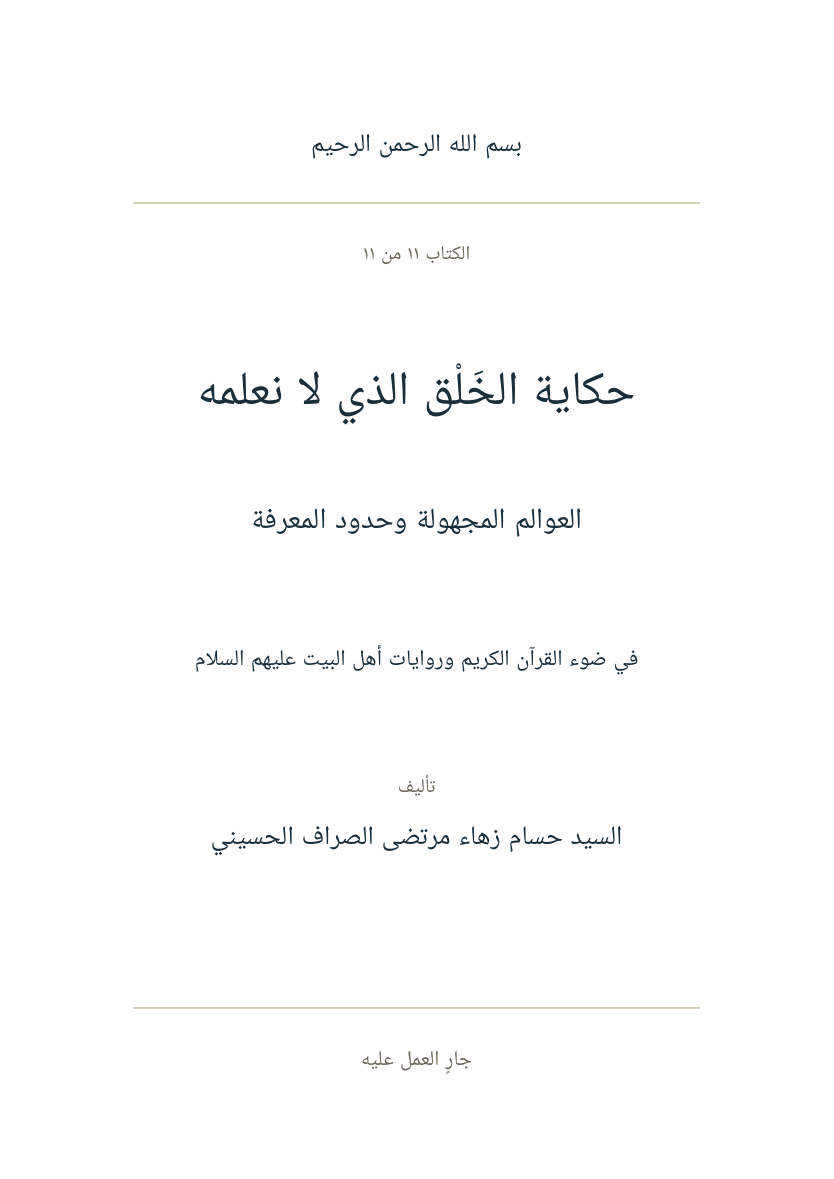
العربية ↗ · English title page ↗
حكاية الخَلْق الذي لا نعلمه
العوالم المجهولة وحدود المعرفة
جارٍ العمل عليه
بحث قيد العمل في النصوص التي تتحدث عن عوالم ومخلوقات لم تُكشف لنا تفاصيلها. ينظم أسئلة المعلوم والمجهول وحدود الاستدلال، ويناقش الأخبار والمصطلحات والاحتمالات دون تحويلها إلى حقائق مقطوع بها أو الخلط بينها وبين النظريات العلمية.
English · Title, overview and status
The Story of Creation We Do Not Know
Unknown Worlds and the Limits of Knowledge
Work in progress
A work in progress on texts concerning worlds and creatures whose details have not been disclosed to us. It examines the known, the unknown and the limits of inference, discussing reports, terms and possibilities without presenting them as established facts or conflating them with scientific theories.
فهرس الفصول · ٢٦ عنوانًا
- عند حدود المعلوم — ما المقصود بالخَلْق الذي لا نعلمه؟
- كيف نعرف ما وراء مشاهدتنا؟
- ربّ العالمين — قراءة في سعة الخَلْق
- ﴿وَيَخْلُقُ مَا لَا تَعْلَمُونَ﴾ — الباب القرآني إلى المجهول
- ﴿وَمِمَّا لَا يَعْلَمُونَ﴾ — تنوّع الخَلْق واتساع دلالات الأزواج
- ما بثّه الله في السماوات والأرض من دابّة
- السماوات السبع ومن الأرض مثلهنّ
- ﴿وَمَا يَعْلَمُ جُنُودَ رَبِّكَ إِلَّا هُوَ﴾ — ما نعرفه وما لا نحصيه
- تسبيح الخلائق الذي لا نفقهه
- الغيب وعلم الإنسان — ما أُخبرنا به وما استأثر الله بعلمه
- أخبار تعدّد العوالم في روايات أهل البيت عليهم السلام
- خبر «ألف ألف عالم وألف ألف آدم» — دراسة في السند والمعنى
- عوالم سبقت عالمنا — مواضع الالتقاء مع حكاية الخَلْق قبل آدم
- عوالم معاصرة لعالمنا؟ — قراءة في دلالات الأخبار
- جابلقا وجابرسا — أخبار المدائن البعيدة
- أهل العوالم المذكورة في الأخبار — الأسماء والصفات وأحوال الحياة
- العبادة والتكليف في أخبار العوالم الأخرى
- الهداية والحجّة في الروايات المتعلقة بالعوالم
- خَلْق جديد بعد هذا العالم؟
- الأعداد والأزمنة والمسافات في أخبار العوالم
- بين ظاهر النص والتأويل — كيف نقرأ أوصاف العوالم؟
- عوالم الغيب ومصطلحات الفلاسفة والعرفاء
- المجهول الحسّي والغيب — أين يبدأ كل منهما؟
- الحياة خارج الأرض والعوالم المتوازية — ضوابط المقارنة
- حين تختلط الرواية بالحكاية
- ما الذي نعرفه، وما الذي يبقى مجهولًا
English contents · 26 chapter titles
- At the limits of the known: what is meant by creation we do not know?
- How do we know what lies beyond our observation?
- Lord of the worlds: reflecting on the vastness of creation
- “He creates what you do not know”: a Quranic doorway to the unknown
- “And of what they do not know”: creation’s diversity and the meanings of pairs
- Creatures Allah has spread through the heavens and earth
- The seven heavens and their like among the earths
- “None knows your Lord’s hosts except Him”: what we know and cannot enumerate
- The praise of creatures that we do not understand
- The unseen and human knowledge: what is revealed and what Allah alone knows
- Reports of multiple worlds in the narrations of Ahl al-Bayt
- The report of “a thousand thousand worlds and Adams”: transmission and meaning
- Worlds before our own: connections with The Story of Creation before Adam
- Worlds contemporary with ours? Reading the implications of reports
- Jabulqa and Jabursa: reports of distant cities
- Inhabitants of worlds mentioned in reports: names, attributes and conditions of life
- Worship and responsibility in reports of other worlds
- Guidance and divine proof in narrations concerning worlds
- A new creation after this world?
- Numbers, times and distances in reports of worlds
- Literal text and interpretation: how do we read descriptions of worlds?
- Unseen worlds and the terminology of philosophers and mystics
- The unobserved and the unseen: where does each begin?
- Extraterrestrial life and parallel worlds: principles of comparison
- When transmitted narration becomes mixed with storytelling
- What do we know, and what remains unknown?
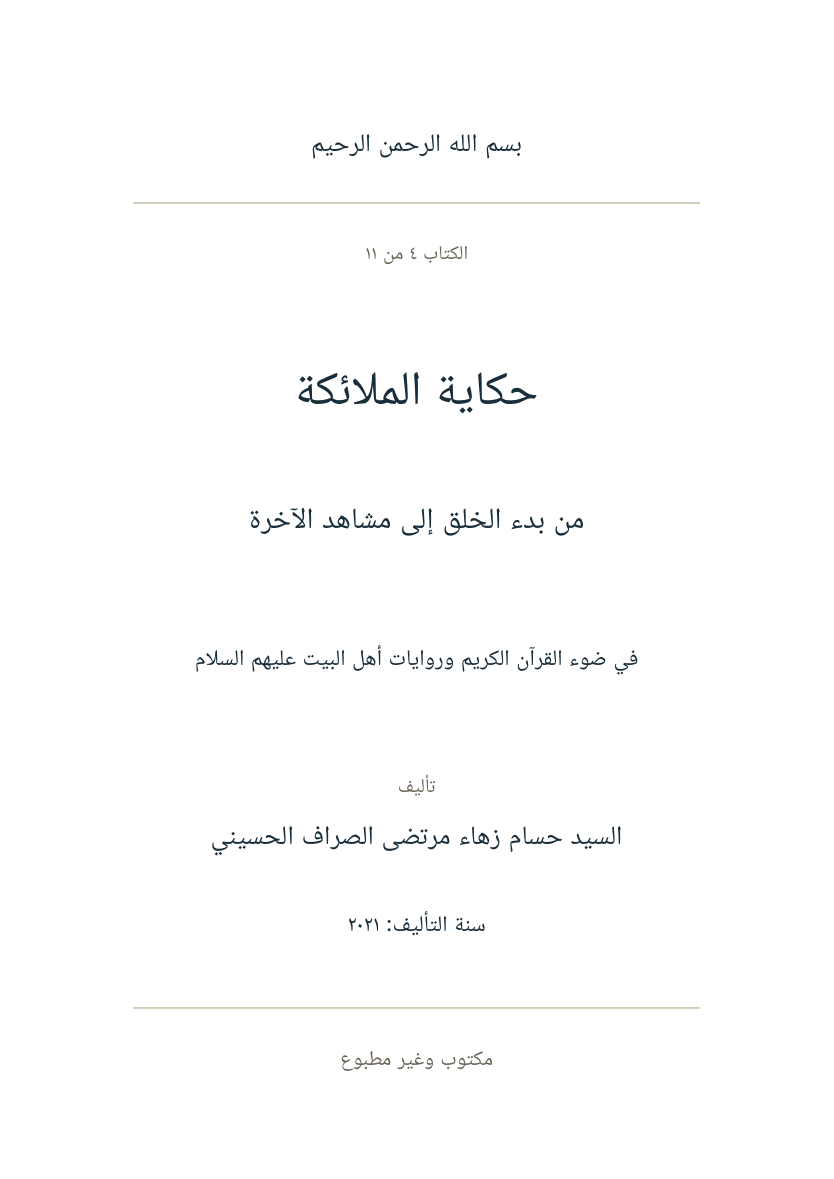
العربية ↗ · English title page ↗
حكاية الملائكة
من بدء الخلق إلى مشاهد الآخرة
مكتوب وغير مطبوع
يجمع ما ورد عن الملائكة وأسمائهم وصفاتهم ووظائفهم في القرآن الكريم والروايات، وعلاقتهم بالوحي والأنبياء وحياة الإنسان والموت والآخرة. ويهتم بتمييز الاسم الثابت بالنص من الأوصاف والأخبار التي تحتاج إلى بيان مصدرها ودرجة ثبوتها.
English · Title, overview and status
The Story of Angels
From the Beginning of Creation to the Scenes of the Hereafter
Written and unprinted
A study of angels, their names, attributes and roles in the Quran and narrations, including their relationship with revelation, the prophets, human life, death and the Hereafter. It distinguishes names established by the texts from descriptions and reports requiring examination of their sources and evidentiary status.
فهرس الفصول · ٥٤ عنوانًا
- قبل خلق آدم: ما ورد عن بداية خلق الملائكة
- ممَّ خُلق الملائكة؟
- صور الملائكة وأجنحتهم وتمثّلهم
- عبادٌ مكرمون: عبودية الملائكة وطاعتهم
- ماذا يعلم الملائكة؟
- مراتب الملائكة ومقاماتهم وأعدادهم
- الروح وروح القدس والروح الأمين
- الملائكة والجن وإبليس: تمييز العوالم وفهم الاختلاف
- حملة العرش والملائكة الحافّون به
- سكان السماوات والبيت المعمور
- ملائكة الحجب والمقربون والروحانيون
- ميكائيل عليه السلام: الاسم والمقام وما ورد في الوظائف
- ملائكة المطر والسحاب والرياح والجبال
- الملائكة وتنفيذ الأمر الإلهي
- جبرئيل عليه السلام: أمين الوحي ورسول السماء
- الملائكة وإعلان خلافة آدم
- السجود لآدم وبداية امتحان إبليس
- الملائكة مع آدم وأسرته وبدايات الهداية
- الملائكة مع إدريس ونوح والأنبياء الأوائل
- ضيوف إبراهيم وبشارة سارة
- الملائكة مع لوط: حماية النبي ونهاية القوم
- الملائكة مع إسماعيل وإسحاق ويعقوب ويوسف
- الملائكة مع موسى وهارون وبني إسرائيل
- الملائكة مع داود وسليمان وسائر أنبياء بني إسرائيل
- هاروت وماروت: العلم والابتلاء وقصة بابل
- الملائكة مع زكريا ومريم وعيسى عليهم السلام
- الملائكة في أخبار مولد النبي ونشأته وبعثته
- نزول القرآن وصحبة جبرئيل للنبي
- الملائكة في الإسراء والمعراج
- الملائكة في بدر والأحزاب وسائر مواطن التأييد
- الملائكة في بيت النبوة
- فطرس وما ورد من أسماء الملائكة في أخبار أهل البيت
- الملائكة والإمام الحسين: أخبار كربلاء والزيارة
- الملائكة مع الأئمة: ليلة القدر وأخبار الإمام المهدي
- الملائكة وبداية حياة الإنسان في الرحم
- الحفظة والمعقّبات: رعاية الإنسان بأمر الله
- الكرام الكاتبون: كيف تُكتب أعمال الإنسان؟
- رقيب وعتيد: تحقيق الوصف والتسمية
- الملائكة والصلاة والقرآن والذكر ومجالس العلم
- الملائكة والدعاء والتوبة والاستغفار للمؤمنين
- الملائكة وأعمال الرحمة بين الناس
- الملائكة والبيوت وحياة الإنسان الخفية
- ملك الموت عليه السلام: الاسم والوظيفة والأعوان
- الملائكة عند الاحتضار وقبض الروح
- منكر ونكير: سؤال القبر وأخبار اللقاء الأول
- رومان وما ورد من تسميات أخرى لملائكة القبر
- الملائكة في البرزخ: النعيم والعذاب وصلتهم بالأرواح
- هل يموت الملائكة؟
- إسرافيل عليه السلام والنفخ في الصور
- الملائكة يوم البعث والحشر
- السائق والشهيد: الملائكة في مشاهد الحساب
- مالك وخزنة جهنم والزبانية
- رضوان وخزنة الجنة
- سلام الملائكة على أهل الجنة
English contents · 54 chapter titles
- Before Adam: reports on the beginning of the angels’ creation
- From what were angels created?
- Angels’ forms, wings and appearances
- Honoured servants: the angels’ servitude and obedience
- What do angels know?
- Angels’ ranks, stations and numbers
- The Spirit, the Holy Spirit and the Trustworthy Spirit
- Angels, jinn and Iblis: distinguishing realms and understanding differences
- Bearers of the Throne and the angels surrounding it
- Inhabitants of the heavens and the Frequented House
- Angels of the veils, those brought near and the spiritual beings
- Michael: name, station and reports of his roles
- Angels of rain, clouds, winds and mountains
- Angels and the execution of the divine command
- Gabriel: entrusted with revelation and messenger of heaven
- Angels and the announcement of Adam’s vicegerency
- Prostration before Adam and the beginning of Iblis’s trial
- Angels with Adam and his family, and the beginnings of guidance
- Angels with Idris, Noah and the early prophets
- Abraham’s guests and the glad tidings to Sarah
- Angels with Lot: protecting the prophet and the fate of his people
- Angels with Ishmael, Isaac, Jacob and Joseph
- Angels with Moses, Aaron and the Children of Israel
- Angels with David, Solomon and the other Israelite prophets
- Harut and Marut: knowledge, trial and the account of Babylon
- Angels with Zechariah, Mary and Jesus
- Angels in reports of the Prophet’s birth, upbringing and mission
- The revelation of the Quran and Gabriel’s companionship with the Prophet
- Angels in the Night Journey and Ascension
- Angels at Badr, the Confederates and other occasions of support
- Angels in the household of prophethood
- Fitrus and angelic names in reports concerning Ahl al-Bayt
- Angels and Imam Husayn: accounts of Karbala and visitation
- Angels with the Imams: the Night of Decree and reports of Imam al-Mahdi
- Angels and the beginning of human life in the womb
- Guardians and successive attendants: caring for people by Allah’s command
- The noble recording angels: how are human deeds recorded?
- Raqib and Atid: examining the descriptions and names
- Angels, prayer, the Quran, remembrance and gatherings of learning
- Angels, supplication, repentance and seeking forgiveness for believers
- Angels and acts of mercy among people
- Angels, homes and the hidden aspects of human life
- The Angel of Death: name, role and helpers
- Angels at the approach of death and the taking of the spirit
- Munkar and Nakir: questioning in the grave and accounts of the first encounter
- Ruman and other reported names of angels of the grave
- Angels in barzakh: bliss, punishment and their relationship with spirits
- Do angels die?
- Israfil and the blowing of the trumpet
- Angels on the day of resurrection and gathering
- The driver and witness: angels in scenes of reckoning
- Malik, the keepers of Hell and the zabaniya
- Ridwan and the keepers of Paradise
- The angels’ greeting of peace to the inhabitants of Paradise
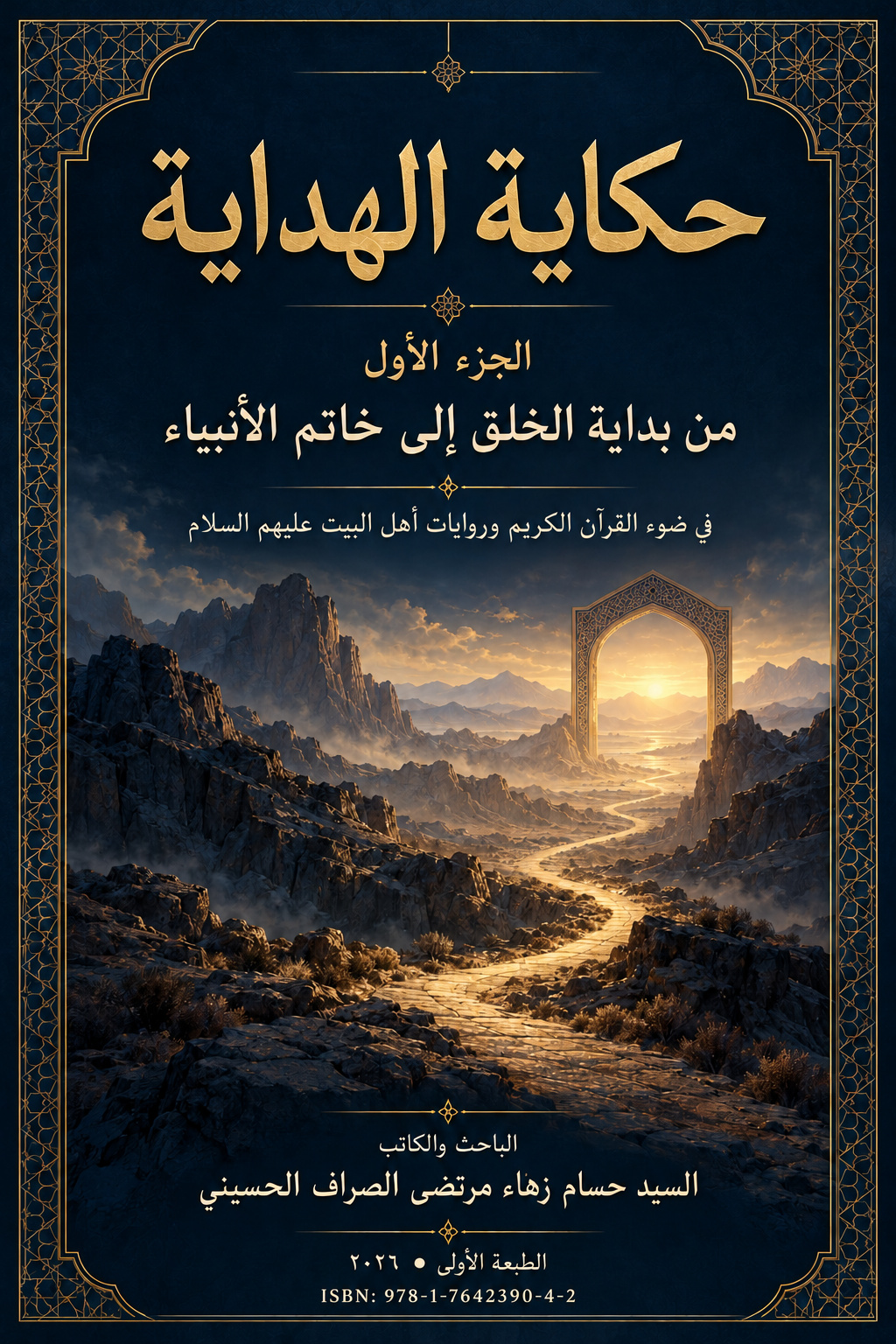
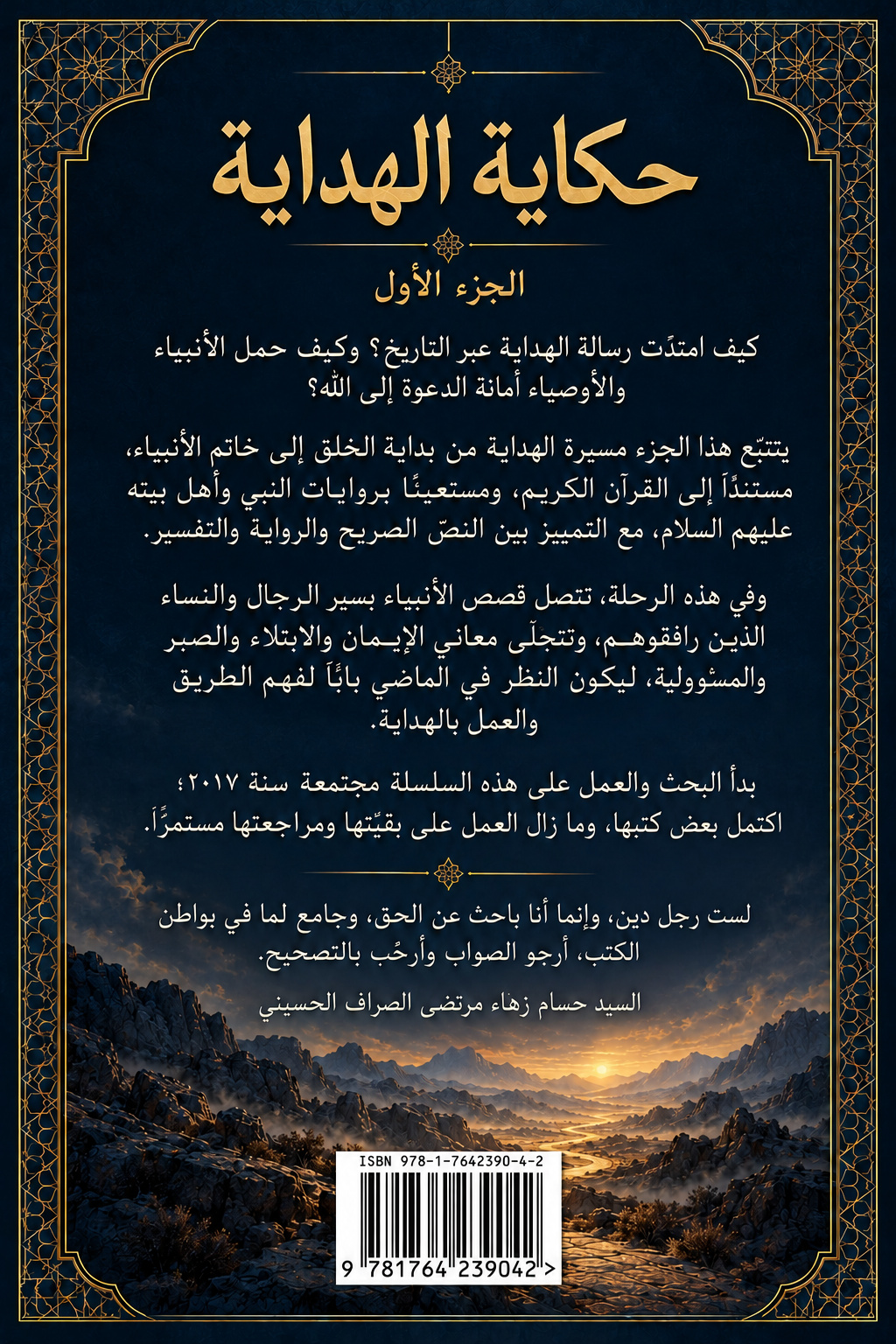
حكاية الهداية – الجزء الأول
من بداية الخلق إلى خاتم الأنبياء
النسختان العربية والإنكليزية متاحتان (PDF)
ISBN: 978-1-7642390-4-2
قراءة وتنزيل النسخة العربية ↗
١٢٨٥ صفحة · ١٠٫٨ ميغابايت · طباعة ↗
Read / download the English edition ↗
1162 pages · 9.9 MB · Print ↗
الكتاب الثامن في السلسلة، نشأ من أسئلة الأبناء والطلبة والشباب وحاجتهم إلى سرد متصل يفهمون به مسيرة الهداية. يتابع الأنبياء والأوصياء وحملة العهد، والرجال والنساء والأسر المرتبطة بهم، ثم يصل المعرفة بمسؤولية الإنسان في حياته. الجزء الأول متاح الآن للقراءة والتحميل بالعربية والإنكليزية، والأجزاء اللاحقة قيد العمل.
English · Title, overview and status
The Story of Divine Guidance
A work in four volumes
Arabic and English editions available · First edition 2026 · Later volumes in progress
The eighth book in the series grew from the questions of children, students and young people, and their need for a connected account of divine guidance. It follows prophets, successors, bearers of the covenant, and the women, men and families connected with them, linking knowledge to human responsibility. Volume One is available in Arabic (1,285 pages) and English (1,162 pages). The later volumes remain in progress.
Read / download the complete Arabic edition (PDF) ↗
Read / download the English edition ↗
مسار الأجزاء الأربعة
- الجزء الأول: من بداية الخلق إلى خاتم الأنبياء — متاح بالعربية والإنكليزية (PDF)
Volume One: From the Beginning of Creation to the Seal of the Prophets — Arabic and English PDFs available - الجزء الثاني: من النبي محمد صلى الله عليه وآله إلى الإمام المهدي عليه السلام — قيد العمل
Volume Two: From Prophet Muhammad to Imam al-Mahdi — in progress - الجزء الثالث: الإمام المهدي عليه السلام من الغيبة إلى الظهور وما بعده — قيد العمل
Volume Three: Imam al-Mahdi from Occultation to Reappearance and Beyond — in progress - الجزء الرابع: الإنسان في طريق الهداية — قيد العمل
Volume Four: The Human Being on the Path of Guidance — in progress
فهرس الجزء الأول المكتمل · عناوين الفصول الخمسين
- قبل آدم عليه السلام: عالم سبق الإنسان
- آدم عليه السلام: بداية الإنسان وحكاية الهداية
- شيث عليه السلام: هبة الله وحامل العهد بعد آدم
- إدريس عليه السلام: نبي الصدق ورفعة المكانة
- نوح عليه السلام: الدعوة والطوفان ونجاة المؤمنين
- سام بن نوح: حامل العهد بعد نوح
- من سام إلى هود: حملة العهد في الأجيال بعد الطوفان
- هود عليه السلام: رسول عاد ومواجهة حضارة القوة
- من هود إلى صالح: استمرار الهداية بين عاد وثمود
- صالح عليه السلام: رسول ثمود وآية الناقة
- من صالح إلى إبراهيم: الأجيال التي حفظت العهد
- إبراهيم عليه السلام: الخليل وإمام مرحلة جديدة من الهداية
- لوط عليه السلام: الهجرة مع إبراهيم ومواجهة قومه
- سارة وهاجر عليهما السلام: بيت إبراهيم وبداية الفرعين
- إسماعيل عليه السلام: مكة والبيت والدعاء للأمة القادمة
- إسحاق عليه السلام: البشارة وامتداد الهداية في الشام
- يعقوب عليه السلام: إسرائيل والأبناء الاثنا عشر
- يوسف عليه السلام: من الجب إلى تمكين الحق
- من يوسف إلى موسى: بنو إسرائيل وحفظ العهد في مصر
- أيوب عليه السلام: الصبر والرحمة بعد البلاء
- شعيب عليه السلام: العدل في الميزان وأهل مدين
- موسى عليه السلام: الميلاد والنجاة
- موسى وهارون عليهما السلام: الرسالة والخروج
- موسى عليه السلام: الكتاب والميثاق والتيه
- الخضر وموسى عليهما السلام: حدود العلم البشري
- يوشع بن نون: حمل العهد بعد موسى
- من يوشع إلى داود: أنبياء بني إسرائيل وحملة العهد
- داود عليه السلام: الحكم والزبور والعدل
- سليمان عليه السلام: الملك المسخّر والحكمة
- آصف بن برخيا: العلم والوصية بعد سليمان
- أنبياء بني إسرائيل بعد سليمان: استمرار الهداية
- إلياس عليه السلام: الدعوة إلى التوحيد
- اليسع عليه السلام: استمرار الدعوة
- يونس عليه السلام: النداء من الظلمات
- ذو الكفل عليه السلام: الصبر وحمل المسؤولية
- إرميا عليه السلام: الإنذار زمن الاضطراب
- دانيال عليه السلام: الثبات في زمن المحنة
- حزقيل وعزير وإليا وجرجيس: شخصيات تذكرها الروايات
- عمران وآل عمران: الأسرة التي مهّدت لميلاد مريم
- مريم عليها السلام: النذر والاصطفاء ورعاية زكريا
- زكريا عليه السلام: الدعاء وبشارة يحيى وامتداد العهد
- يحيى عليه السلام: الحكم صبيًا والشهادة للحق
- عيسى ابن مريم عليهما السلام: الميلاد والرسالة والآيات
- شمعون الصفا ومن حمل الهداية بعد عيسى: الوصية وثبات حملة الرسالة
- الفترة بين عيسى ومحمد صلى الله عليه وآله: انتظار البشارة وحفظ التوحيد
- أجداد النبي محمد وبيت النبوة: الجذور الإبراهيمية والأسرة الحاضنة للرسالة
- محمد صلى الله عليه وآله: الميلاد والنشأة والاستعداد للرسالة
- محمد صلى الله عليه وآله: البعثة والدعوة في مكة
- محمد صلى الله عليه وآله: الهجرة وبناء الأمة
- محمد صلى الله عليه وآله: اكتمال الرسالة وبيان الوصية
English contents · Volume One: 50 chapter titles
- Before Adam: a world preceding humanity
- Adam: the beginning of humanity and divine guidance
- Seth: God’s gift and bearer of the covenant after Adam
- Idris: truthfulness and an elevated station
- Noah: the call, the flood and the salvation of believers
- Shem son of Noah: bearer of the covenant after Noah
- From Shem to Hud: bearers of the covenant after the flood
- Hud: the messenger to Ad and the challenge of power
- From Hud to Salih: guidance between Ad and Thamud
- Salih: the messenger to Thamud and the sign of the she-camel
- From Salih to Abraham: generations that preserved the covenant
- Abraham: God’s friend and leader of a new stage of guidance
- Lot: migration with Abraham and his encounter with his people
- Sarah and Hagar: Abraham’s household and the two branches
- Ishmael: Mecca, the House and prayer for the coming community
- Isaac: the glad tidings and the continuation of guidance in the Levant
- Jacob: Israel and the twelve sons
- Joseph: from the well to the establishment of truth
- From Joseph to Moses: the Children of Israel and the covenant in Egypt
- Job: patience and mercy after affliction
- Shuayb: justice in the balance and the people of Midian
- Moses: birth and deliverance
- Moses and Aaron: the message and the Exodus
- Moses: the Book, the covenant and the wilderness
- Al-Khidr and Moses: the limits of human knowledge
- Joshua son of Nun: bearing the covenant after Moses
- From Joshua to David: Israelite prophets and bearers of the covenant
- David: rule, the Psalms and justice
- Solomon: the kingdom placed at his service and wisdom
- Asif ibn Barkhiya: knowledge and succession after Solomon
- Israelite prophets after Solomon: the continuation of guidance
- Elijah: the call to monotheism
- Elisha: the continuation of the call
- Jonah: the call from the darkness
- Dhu al-Kifl: patience and responsibility
- Jeremiah: warning in a time of turmoil
- Daniel: steadfastness in a time of trial
- Ezekiel, Uzayr, Ilya and Jirjis: figures mentioned in narrations
- Imran and his family: the household preceding Mary’s birth
- Mary: dedication, divine choosing and Zechariah’s care
- Zechariah: prayer, the tidings of John and the continuation of the covenant
- John: wisdom in childhood and witness to the truth
- Jesus son of Mary: birth, message and signs
- Simon Peter and the bearers of guidance after Jesus: succession and steadfastness
- Between Jesus and Muhammad: awaiting the glad tidings and preserving monotheism
- Prophet Muhammad’s ancestors and household: Abrahamic roots and the family of the message
- Muhammad: birth, upbringing and preparation for the message
- Muhammad: the beginning of revelation and the call in Mecca
- Muhammad: migration and the building of the community
- Muhammad: completion of the message and clarification of the testament

